BUT WHERE WILL THE SOLDIERS COME FROM?
We don't have the infrastructure to sandbag the levys, and thus an American city
dies of neglect. We've used up our National Guard and Reserves. Wjhat soldiers
we have in the field are in Korea or in the *real* war against Islamist
terrorism in Afghanistan. Now President Bush, in an increasingly surreal
national nightmare, sounds about Iran a lot like he did about Iraq, before the
invasion. America has the will neither to resort to a military draft nor to the
dangerous precedent of unleashing our own nuclear arsenal. Yet talk of war with
Iran is in the air. The theocracy in Iran is an abomination. It would never
have come into being if we had had a more pragmatic view in the late 1970s.
Thank you, Jimmy Carter, exit the Shah , enter the
dragon of medievalist Islamo-fascism.
. But, here we are, post-Soviet, post 9/11
and, it seems, post reality. We have Bush. Night Falls. Henry_Allen
Don't try to solve serious matters in the middle of the night.
- Philip K. Dick
consortiumnews.com
Iran Clock Is Ticking
By Robert Parry
January 31, 2007
While congressional Democrats test how far they should go in challenging George
W. Bush’s war powers, the time may be running out to stop Bush from ordering a
major escalation of the Middle East conflict by attacking Iran.
Military and intelligence sources continue to tell me that preparations are
advancing for a war with Iran starting possibly as early as mid-to-late
February. The sources offer some differences of opinion over whether Bush might
cite a provocation from Iran or whether Israel will take the lead in launching
air strikes against Iran’s nuclear facilities.
But there is growing alarm among military and intelligence experts that Bush
already has decided to attack and simply is waiting for a second aircraft
carrier strike force to arrive in the region – and for a propaganda blitz to
stir up some pro-war sentiment at home.
One well-informed U.S. military source called me in a fury after consulting with
Pentagon associates and discovering how far along the war preparations are. He
said the plans call for extensive aerial attacks on Iran, including use of
powerful bunker-busting ordnance.
Another source with a pipeline into Israeli thinking said the Iran war plan has
expanded over the past several weeks. Earlier thinking had been that Israeli
warplanes would hit Iranian nuclear targets with U.S. forces in reserve in case
of Iranian retaliation, but now the strategy anticipates a major U.S. military
follow-up to an Israeli attack, the source said.
Both sources used the same word “crazy” in describing the plan to expand the war
to Iran. The two sources, like others I have interviewed, said that attacking
Iran could touch off a regional – and possibly global – conflagration.
“It will be like the TV show ‘24’,” the American military source said, citing
the likelihood of Islamic retaliation reaching directly into the United States.
Though Bush insists that no decision has been made on attacking Iran, he offered
similar assurances of his commitment to peace in the months before invading Iraq
in 2003. Yet leaked documents from London made clear that he had set a course
for war nine months to a year before the Iraq invasion.
In other words, Bush’s statements that he has no plans to "invade" Iran and that
he’s still committed to settle differences with Iran over its nuclear program
diplomatically should be taken with a grain of salt.
There is, of course, the possibility that the war preparations are a game of
chicken to pressure Iran to accept outside controls on its nuclear program and
to trim back its regional ambitions. But sometimes such high-stakes gambles lead
to miscalculations or set in motion dynamics that can't be controlled.
‘You Will Die’
The rapidly deteriorating situation in Iraq is seen as another factor pressing
on Bush to act quickly against Iran.
Other sources with first-hand knowledge of conditions in Iraq have told me that
the U.S. position is even more precarious than generally understood. Westerners
can’t even move around Baghdad and many other Iraqi cities except in armed
convoys.
“In some countries, if you want to get out of the car and go to the market,
they’ll tell you that it might be dangerous,” one experienced American cameraman
told me. “In Iraq, you will be killed. Not that you might be killed, but you
will be killed. The first Iraqi with a gun will shoot you, and if no one has a
gun, they’ll stone you.”
While U.S. war correspondents in most countries travel around in taxis with “TV”
taped to their windows, Western journalists in Iraq move only in armed convoys
to and from specific destinations. They operate from heavily guarded Baghdad
hotels sometimes with single families responsible for security since outsiders
can't be trusted.
The American cameraman said one European journalist rebelled at the confinement,
took off on her own in a cab – and was never seen again.
Depression also is spreading among U.S. intelligence officials who monitor
covert operations in Iraq from listening stations sometimes thousands of miles
away. The results of these Special Forces operations have been so horrendous
that morale in the intelligence community has suffered.
The futility of the Iraq War also is contributing to professional cynicism. Some
intelligence support personnel are volunteering for Iraq duty not because they
think they can help win the war but because the hazard pay is high and life in
the protected Green Zone is relatively safe and easy.
Once getting past the risks of the Baghdad airport and the dangerous road into
the city, U.S. civilian government personnel ensconce themselves in the Green
Zone, which amounts to a bubble of U.S. creature comforts – from hamburgers to
lounging by the pool – separate from the world of average Iraqis who are mostly
barred.
Cooks are brought in from other countries out of the unstated concern that
Iraqis might poison the food.
That American officials have come to view a posting in Iraq as a pleasant career
enhancer – rather than a vital national security mission for the United States –
is another sign that the war is almost certainly beyond recovery.
Another experienced observer of conflicts around the world told me that Bush’s
new idea of putting small numbers of U.S. troops among Iraqi government forces
inside police stations represents an act of idiocy that is sure to get Americans
killed.
Conditions in Iraq have so deteriorated – and animosity toward Americans has so
metastasized – that traditional counterinsurgency strategies are hard to
envision, too.
Normally, winning the hearts and minds of a target population requires a
commitment to move among the people and work on public action projects, from
building roads to improving the judicial system. But all that requires some
measure of political goodwill and personal trust.
Given the nearly four years of U.S. occupation and the devastation that Iraq has
suffered, not even the most talented American counterinsurgency specialists can
expect to overcome the hatred swelling among large segments of Iraqi society.
Bush’s “surge” strategy of conducting more military sweeps through more Iraqi
neighborhoods – knocking down doors, gunning down hostile Iraqis and dragging
off others to detention camps – is not likely to assuage hard feelings.
Wider War
So, facing slim odds in Iraq, Bush is tempted by the allure of escalation, a
chance to blame the Iranians for his Iraq failure and to punish them with air
strikes. He might see that as a way to buy time, a chance to rally his pro-war
supporters and a strategy for enhancing his presidential legacy.
But the consequences both internationally and domestically – from possible
disruption of oil supplies to potential retaliation from Islamic terrorists –
could be devastating.
Yet, there is a sense of futility among many in Washington who doubt they can do
anything to stop Bush. So far, the Democratic-controlled Congress has lagged
behind the curve, debating how to phrase a non-binding resolution of disapproval
about Bush’s “surge” of 21,500 troops in Iraq, while Bush may be opening an
entirely new front in Iran.
According to intelligence sources, Bush’s Iran strategy is expected to let the
Israelis take a lead role in attacking Iran's nuclear facilities in order to
defuse Democratic opposition and let the U.S. intervention be sold as defensive,
a case of a vulnerable ally protecting itself from a future nuclear threat.
Once American air and naval forces are committed to a new conflict, the
Democrats will find it politically difficult to interfere at least in the near
future, the thinking goes. A violent reaction from the Islamic world would
further polarize the American population and let Bush paint war critics as
cowardly, disloyal or pro-terrorist.
As risky as a wider war might be, Bush’s end game would dominate the final two
years of his presidency as he forces both Republican and Democratic candidates
to address issues of war and peace on his terms.
On Jan. 10, the night of Bush’s national address on the Iraq War, NBC Washington
bureau chief Tim Russert made a striking observation about a pre-speech briefing
that Bush and other senior administration officials gave to news executives.
“There’s a strong sense in the upper echelons of the White House that Iran is
going to surface relatively quickly as a major issue in the country and the
world in a very acute way – and a prediction that in 2008 candidates of both
parties will have as a fundamental campaign promise or premise a policy to deal
with Iran and not let it go nuclear,” Russert said. “That’s how significant Iran
was today.”
So, Bush and his top advisers not only signaled their expectation of a “very
acute” development with Iran but that the Iranian issue would come to dominate
Campaign 2008 with candidates forced to spell out plans for containing this
enemy state.
What to Do?
The immediate question, however, is what, if anything, can Congress and the
American people do to head off Bush’s expanded war strategy.
Some in Congress have called on Bush to seek prior congressional approval before
entering a war with Iran. Others, such as Sen. Arlen Specter, R-Pennsylvania,
have asked Bush to spell out how expansive he thinks his war powers are.
"I would suggest respectfully to the President that he is not the sole decider,"
Specter said during a Senate hearing on war powers on Jan. 30. "The decider is a
shared and joint responsibility."
But Bush and his neoconservative legal advisers have made clear that they see
virtually no limits to Bush's "plenary" powers as Commander in Chief at a time
of war. In their view, Bush is free to take military actions abroad and to waive
legal and constitutional constraints at home because the United States has been
deemed part of the "battlefield."
Nothing short of a direct congressional prohibition on war with Iran and a
serious threat of impeachment would seem likely to give Bush more than a
moment’s pause. But congressional Republicans would surely obstruct such
measures and Bush might well veto any law that was passed.
Still, unless Congress escalates the confrontation with the President – and does
so quickly – it may be too late to stop what could become a very dangerous
escalation.
[For more on this topic, see Consortiumnews.com’s “Logic of a Wider Mideast
War.”]
Robert Parry broke many of the Iran-Contra stories in the 1980s for the
Associated Press and Newsweek. His latest book, Secrecy & Privilege: Rise of the
Bush Dynasty from Watergate to Iraq, can be ordered at secrecyandprivilege.com.
It's also available at Amazon.com, as is his 1999 book, Lost History: Contras,
Cocaine, the Press & 'Project Truth.'
Showing posts with label Bush. Show all posts
Showing posts with label Bush. Show all posts
Thursday, February 1, 2007


Thursday, January 25, 2007
A STATE OF DISUNION

I don’t agree with every word of this analysis – I do feel that there is a fundamental clash of civilizations beginning with the Islamic Revolution in
. Henry_Allen
Bush's War on the Republic
From the beginning of the “war on terror,” George W. Bush has lied to the American people about the goals, motivation and even the identity of the enemy – a propaganda exercise that continued through his 2007 State of the Union Address and that is sounding the death knell for the Republic.
Since 2001, rather than focusing on the al-Qaeda Sunni fundamentalist terrorists behind the 9/11 attacks, Bush has expanded the conflict exponentially – tossing in unrelated enemies such as
In effect, Bush has transformed what began as a definable military objective – the defeat of “terrorist groups with global reach” – into an endless war against what he regards as evil, a conflict so vague that it is claiming as collateral damage
In Bush’s State of the
“The evil that inspired and rejoiced in 9/11 is still at work in the world. And so long as that’s the case,
But that “evil” will always be “at work in the world,” so
Bluntly put, Bush and his neoconservative legal advisers don't believe in the “unalienable rights” guaranteed by the U.S. Constitution, including ones as fundamental as the habeas corpus right to a fair trial and protections against warrantless searches and seizures. [See, for instance, Consortiumnews.com's "Gonzales Questions Habeas Corpus."]
The Bush administration may make grudging concessions in these areas when faced with determined opposition in the courts or from the public, but they hold these liberties to be subordinate to Bush’s “plenary” – or unlimited – powers as Commander in Chief.
Beyond this disdain for fundamental American liberties, Bush has contempt for any meaningful public debate. Though he talks about compromise and consultation, his view of national unity is to have everyone shut up and get in line behind him, "the Decider."
Since the 9/11 attacks, Bush has overseen a bare-knuckled political strategy of bullying anyone who disagrees with him and marginalizing their voices. From the Dixie Chicks to former Ambassador Joseph Wilson, from
These ugly attacks have become so much a part of the American political landscape that the news media treats them as unexceptional, as if it’s normal for a President to coordinate with powerful media allies to silence dissent.
For instance, there was no media outcry in April 2003 when Bush gave a wink and a nod to a retaliatory boycott against the three-woman Dixie Chicks band because the lead singer, Natalie Maines, had criticized the President.
“They shouldn’t have their feelings hurt just because some people don’t want to buy their records when they speak out,” Bush said. “Freedom is a two-way street.”
So, instead of encouraging a full-and-free debate about an issue as important as war and peace, Bush made clear that he saw nothing wrong with his followers punishing Americans who disagree with him.
'Democrat Party'
While Bush may have softened his belligerent style slightly since the Republican defeat in the November 2006 elections, he still couldn’t muster enough politeness to refer to the “Democratic” Party in his State of the
For years, tough-talking Republicans have made it a point of insult to drop the “-ic” and use “Democrat” as the adjective. This phrasing has become a mark of the swaggering Republicans who have dominated this era of
So, even as Bush was supposedly trying to be gracious to House Speaker Nancy Pelosi, he couldn’t stop himself from congratulating the “Democrat majority.”
More significantly, however, Bush continues to demean the Constitution. Despite having sworn “to preserve, defend and uphold the Constitution” as his preeminent duty, Bush keeps insisting that the highest obligation of government is to keep the people safe.
He repeated that mantra in his State of the
In other words, Bush believes security – or at least his view of security – trumps everything, including constitutional rights.
But that concept turns upside down more than two centuries of
Bush apparently sees the American people as a pudgy bunch of consumers as soft in the head as in their bellies. In the State of the
To heighten the fears of Americans, he again misrepresented the goals, capabilities and even the identities of the enemy. He blurred diverse and even antagonistic Muslim Sunni and Shiite groups, shoving them under the umbrella of “the Islamist radical movement.”
“The Shia and Sunni extremists are different faces of the same totalitarian threat,” Bush said. “Whatever slogans they chant, when they slaughter the innocent they have the same wicked purposes. They want to kill Americans, kill democracy in the
But this depiction is a continuation of Bush's tendency to misstate the key question of what's motivating Islamic militancy.
In September 2001, Bush claimed that the motive behind the 9/11 attacks and other manifestations of anti-Americanism in the
However, this distortion of what drives the swelling anti-Americanism in the
Diverse Motives
The truth is that the motives of Islamic militants are much more complicated and diverse than Bush wants the American people to know.
In
Some Middle Eastern militants are resentful of U.S.-backed autocrats like those governing
In the Palestinian territories, Hamas did win an election. In
Even al-Qaeda has far more limited objectives than Bush has claimed. Despite Bush’s oft-stated assertion that – if the
Intercepted al-Qaeda documents actually reveal leaders fretting about how fragile their position in
“Indeed, prolonging the war is in our interest,” Atiyah wrote. [For details, see Consortiumnews.com’s “Al-Qaeda’s Fragile Foothold.”]
Yet, even as Bush's Iraq War strategy plays into the hands of al-Qaeda, the President told Congress and the American people that he intends to confront radical Shiite movements in the region with determination equal to that aimed at Sunni extremists. Bush said:
“In recent times, it has also become clear that we face an escalating danger from Shia extremists who are just as hostile to
But Bush left out the history about those American deaths. He was referring primarily to the 241
By definition, terrorism is a violent attack on civilians to achieve a political end. Hezbollah’s attack in 1983, therefore, was not an act of terrorism as lamentable as the military deaths were. Bush, however, blurs the point by associating the bombing with al-Qaeda’s 9/11 attacks on civilian targets inside the
Although the
Guaranteeing Defeat
Lumping
Bush also finds himself caught in a contradiction between his rhetorical embrace of
At one point in his State of the Union speech, Bush denounced extremists who seek to “overthrow moderate governments” but returned to his lofty rhetoric about democracy and freedom as vital components in defeating the extremists.
“To prevail, we must remove the conditions that inspire blind hatred,” Bush said. “What every terrorist fears most is human freedom. … The great question of our day is whether
Though a surefire applause line, Bush’s praise of liberty represents possibly the most insidious lie from his "war on terror." As
As was obvious during Secretary of State Condoleezza Rice’s trip to the
Bush’s exhortations about human freedom therefore are galling to many in the world who see Bush himself as the world’s most notorious autocrat, violating international law at his personal whim and overriding the constitutional liberties of Americans at home.
Bush is the personification of what recent polls of global opinion have registered as a leading complaint about
There is also no end in sight, Bush made clear.
“The war on terror we fight today is a generational struggle that will continue long after you and I have turned our duties over to others,” Bush told Congress. “And that’s why it’s important to work together so our nation can see this great effort through.”
But the bottom line for Bush’s “war on terror” is that it won't just cost countless lives and hundreds of billions of dollars; it also is doomed to fail, at least as presently constituted. If it lasts much longer, it is certain, too, to deliver a death blow to the noble
Robert Parry broke many of the Iran-Contra stories in the 1980s for the Associated Press and Newsweek. His latest book, Secrecy & Privilege: Rise of the Bush Dynasty from Watergate to Iraq, can be ordered at secrecyandprivilege.com. It's also available at Amazon.com, as is his 1999 book, Lost History: Contras, Cocaine, the Press & 'Project Truth.'
To comment at Consortiumblog, click here. To comment to us by e-mail, click here. To donate so we can continue reporting and publishing stories like the one you just read, click here.
Tuesday, January 2, 2007
BUSH LEAGUE WAR TOPS 3000 U.S. DEAD
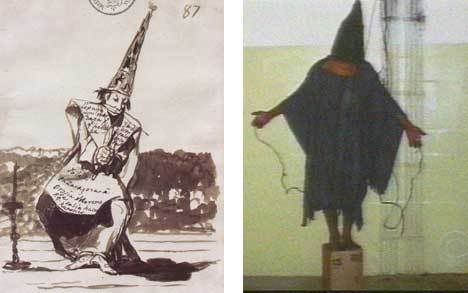
The American 'crusade' into Iraq has proven to be a disaster from the outset to its inevitable end-game which will be a bit like --no, a LOT like - the ignominious exit from Saigon of U.S. troops thiry years ago. The war on terrorism, or, rather, the war on Islamist fanaticism, the clash of civilizations is quite real, and Iraq has added to the enemy's credit, not ours. The *one* thing we might salvage of honor is to help the one non-Arab legitimate national group seeking its own place in the sunlight, the long-suffering Kurdish people. If we ultimately do not abandon our friends and genuine allies the Kurds of "northern Iraq" (see banner below), and simply leave the Iraqis to the barbaric Islamist Civil War they so richly deserve, but *leave*, we will have done well, served American interests well, and done a bit to make up for the farce the Bush administration has foisted upon the American people and military in the shadow of 9/11.

THE SOUND OF DISTANT THUNDER-LAST WORDS ON THE SUBJECT
"They sow the wind
and reap the whirlwind. "
Hosea 8:7
""The Baath party and Baathists still exist in Iraq, and nobody can marginalize it."
Samir al-Obaidi, who attended a Saddam memorial
BITS FROM THE MEDIA - THE DAY AFTER THE LYNCHING OF THE PREVIOUS (SECULAR) DICTATOR BY THE CURRENT ISLAMIST DICTATORSHIP
Report: U.S. Tried To Delay Saddam Hanging
BAGHDAD, Jan. 1, 2007(CBS/AP) In the hours before Saddam Hussein was led to the gallows by men in ski masks, the U.S. ambassador to Iraq reportedly tried, but failed, to delay the execution, reports CBS News correspondent Randall Pinkston.
A Reuters report, quoting Iraqi officials familiar with the discussions, says ambassador Zalmay Khalilzad insisted that Prime Minister Nuri al-Maliki provide certain documents, including a signature from Iraq's president.
Iraq's national security adviser Mowaffak al-Rubaie confirmed to CBS News that the U.S. "brought to the attention of the government of Iraq to be careful with ... documentation" and that Iraq provided the required paperwork including "a consent document from President Jalal Talabani."
The U.S. had leverage. From the moment of his capture, to his trial and sentencing, Saddam was in U.S. military custody, reports Pinkston. After the flurry of negotiations, Saddam wasn't handed over until a few hours before his execution.
After Hussein's burial today, rage over the hanging spilled into the streets in many parts of the Sunni Muslim hartland Monday, especially in Samarra where a mob of angry protesters broke the locks off the badly damaged Shiite Golden Dome mosque and marched through carrying a mock coffin and photo of the executed former leader.
Sunni extremists had blown apart the glistening dome on the Shiite holy place 10 months earlier, setting in motion the sectarian slaughter that now grips the troubled land.
The U.S. death toll climbed to at least 3,002 by the final day of 2006 as the American military reported the deaths of two more soldiers in an explosion Sunday in Diyala Province, northeast of the capital.
The Samarra protest was particularly significant because it signaled a widening expression of defiance among Sunnis, the minority Muslim sect in Iraq that had enjoyed special status and power under Saddam and had oppressed the now-ascendant Shiite majority for centuries.
Until Saddam was executed, excluding a few days of protests after his death sentence was handed down Nov. 5, the broader Sunni population had sought a low profile in the sectarian conflict that had seen thousands of them killed or driven from their homes by Shiite militia forces since the Samarra bombing Feb. 22.
Sunni insurgents and foreign fighters of al-Qaida in Iraq had been conducting a bloody insurgency with attacks on U.S. forces and brutal bombings against Shiite civilians since the summer of 2003, shortly after Saddam was ousted in the American-led invasion.
While many Sunnis were known to be sympathetic to the insurgency, its active membership had not reached broadly into the Sunni population. The angry Sunni protests that now are building in the country could presage deeper involvement by what until now had been a largely quiescent group.
The Sunnis were not only angered by Saddam's hurried execution, just four days after an appeals court upheld his conviction and sentence, but were increasingly incensed by the unruly and undignified manner in which the hanging was carried out.
A clandestine video of the hanging showed Saddam was taunted by some present at the execution with chants of "Muqtada, Muqtada, Muqtada" in the last moments of his life. The chants were a reference to anti-American Shiite cleric Muqtada al-Sadr, who runs one of the deadliest religious militias in Iraq and is a major power behind the government of al-Maliki, who had pushed for Saddam to be hanged before the year was out.
Saddam was put to death on the eve of the Shiite celebration of the Eid al-Ahda, the major Muslim festival marking the end of the hajj pilgrimage to Mecca and a remembrance Abraham's willingness to sacrifice of his son, now symbolized by the slaughtering of sheep.
The first judge in the so-called Dujail trial, Rizgar Mohammed Amin, said Saddam's execution in the during the eid was illegal according to Iraqi law. Sunni Muslim festivities marking the holiday began on the same day that Saddam was hanged. Rizgar, a Kurd, was removed as chief judge in the case after Shiite complaints that he was too lenient. He was replaced in January 2006 by Raouf Rasheed Abdel-Rahman.
"The implementation of Saddam's execution during Eid al-adha is illegal according to chapter 9 of the tribunal law. Article 27 states that nobody, even the president (Jalal Talabani), may change rulings by the tribunal and the implementation of the sentence should not happen until 30 days after publication that the appeals court has upheld the tribunal verdict.
The hanging during the Eid al-Adha period (also) contradicts Iraqi and Islamic custom. "Article 290 of the criminal code of 1971 (which was largely used in the Saddam trial) states that no verdict should implemented during the official holidays or religious festivals," he said.
In northern Baghdad, hundreds of Sunnis conducted a demonstration to mourn Saddam in a predominantly Sunni neighborhood.
"The Baath party and Baathists still exist in Iraq, and nobody can marginalize it," said Samir al-Obaidi, 48, who attended a Saddam memorial in the Azamiyah neighborhood.
In Dor, 77 miles north of Baghdad, hundreds more took to the streets to inaugurate a giant mosaic of Saddam.
Children carried toy guns and men fired into the air. Mourners at a mosque in Saddam's hometown of Tikrit slaughtered sheep as a sacrifice for their former leader. The mosque's walls were lined with condolence cards from tribes in southern Iraq and Jordan who were unable to travel to the memorial.
Saddam's eldest daughter briefly attended a protest Monday in Amman - her first public appearance since her father was hanged.
Raghad Saddam Hussein stopped in at the demonstration staged by the Professional Associations, a body that groups unions for doctors, engineers and lawyers, in its office parking lot in west Amman.
"God bless you, and I thank you for honoring Saddam, the martyr," two witnesses recalled Raghad Saddam Hussein as telling the protesters, who included a junior Cabinet minister, on her arrival. She left a minute later.
Also, U.S. forces killed six people in a raid on the Baghdad offices of a top Sunni politician, Saleh al-Mutlaq, on suspicion it was being used as an al-Qaida safe house, the military and Iraqi police said.
The U.S. military said took on heavy fire from automatic weapons and rocket-propelled grenades as they sought to enter the building. Al-Mutlaq is a senior member of the National Dialogue Front, which holds 11 of the 275 seats in Iraq's parliament.
Police said the raid also took place near the home of Salama al-Khafaji, a former Shiite parliamentarian who abandoned her residence after escaping an assassination attempt last year.
Ground troops were backed by helicopters that "engaged the enemy with precision point target machine gun fire," the military said. It was unclear whether the deaths resulted from the ground assault or fire from U.S. helicopters.
Associated Press Television News footage showed masses of rubble in the area and what appeared to be a long smear of blood where a body had been dragged across the floor of one of the buildings.
Walls in the buildings were pitted with what looked to be the impact of bullets and shrapnel.
With the announced deaths of two more soldiers, the Associated Press count of fatalities showed at least 113 U.S. service members died in December, the bloodiest month of 2006, a year in which at least 822 forces died.
Police reported finding the bodies of 40 handcuffed, blindfolded and bullet-riddled bodies in Baghdad on the first day of the New Year. A police official, who refused to be named out of security fears, said "15 of these bodies found in one place," the largely industrial Sheik Omar district in northern Baghdad.
Otherwise the there were no reported violent deaths in the country Monday with the exception of the shooting death of an Iraqi worker for Algerian Embassy in Baghdad.
Also Monday, the Iraqi government sealed the offices of a privately owned television station, charging it had incited violence and hatred in its programming.
A journalist for Al-Sharqiya station, which broadcasts from Dubai, said the station closed its Baghdad office three months ago because of attacks on its staff.
"The channel administration decided to close it for security reasons," said the journalist, who spoke on condition of anonymity because of safety concerns.
Al-Sharqiya remained on the air late Monday. The station is owned by Saad al-Bazzaz, a one-time chief of radio and television for Saddam.
© MMVII The Associated Press. All Rights Reserved. This material may not be published, broadcast, rewritten, or redistributed.
Sunni anger over Saddam hanging spills into streets
Updated 1/1/2007 7:03 PM ET
BAGHDAD (AP) — Enraged crowds protested the hanging of Saddam Hussein across Iraq's Sunni heartland Monday, as a mob in Samara broke the locks off a bomb-damaged Shiite shrine and marched through carrying a mock coffin and photo of the dictator.
The demonstration in the Golden Dome, shattered in a bombing by Sunni extremists 10 months ago, suggests that many Sunni Arabs may now more actively support the small number of Sunni militants fighting the country's Shiite-dominated government. The Feb. 22 bombing of the shrine triggered the current cycle of retaliatory attacks between Sunnis and Shiia, in the form of daily bombings, kidnappings and murders.
Monday's protest came on a day that saw the U.S. military kill six Iraqis during a raid on the offices of a prominent Sunni political figure, who was suspected of giving al-Qaeda in Iraq fighters sanctuary.
Until Saddam's execution Saturday, most Sunnis sympathized with militants but avoided taking a direct role in the sectarian conflict — despite attacks by Shiite militia that have killed thousands of Sunnis or driven them from their homes. The current Sunni protests, which appear to be building, could signal a spreading militancy.
Sunnis were not only outraged by Saddam's hurried execution, just four days after an appeals court upheld his conviction and sentence. Many were also incensed by the unruly scene in the execution chamber, captured on video, in which Saddam was taunted with chants of "Muqtada, Muqtada, Muqtada."
The chants referred to Muqtada al-Sadr, a firebrand Shiite cleric who runs one of Iraq's most violent religious militias. He is a major power behind the government of Shiite Prime Minister Nouri al-Maliki.
Many Sunnis are also upset that Saddam was put to death the day that Sunni celebrations began for Eid al-Ahda, a major Muslim festival. The judge who first presided over the case that resulted in Saddam's death sentence said the former dictator's execution at the start of Eid was illegal according to Iraqi law, and contradicted Islamic custom.
The law states that "no verdict should implemented during the official holidays or religious festivals," said Judge Rizgar Mohammed Amin, a Kurd.
Rizgar presided over Saddam's trial on charges he killed 148 Shiite men and boys in Dujail, north of Baghdad, in a botched assassination attempt in 1982. The judge was removed from the case after Shiite complaints that he was too lenient.
In a Sunni neighborhood in northern Baghdad, hundreds of demonstrators mourned the executed leader. Some praised the Baath Party, the outlawed nationalist group that under Saddam cemented Sunni Arab dominance of Iraq.
"The Baath party and Baathists still exist in Iraq, and nobody can marginalize it," said Samir al-Obaidi, 48, who attended a Saddam memorial in the Azamiyah neighborhood.
In Dor, 77 miles north of Baghdad, hundreds more took to the streets to attend the dedication of a giant mosaic of Saddam. Children carried toy guns and men fired real weapons into the air.
Mourners at a mosque in Saddam's hometown of Tikrit slaughtered sheep as a sacrifice for their former leader. The mosque's walls were lined with condolence cards from tribes in southern Iraq and Jordan who were unable to travel to the memorial.
Saddam's eldest daughter briefly attended a protest Monday in Jordan — her first public appearance since her father was hanged.
"God bless you, and I thank you for honoring Saddam, the martyr," said Raghad Saddam Hussein, according to two witnesses. She addressed members of the Professional Associations — an umbrella group of unions representing doctors, engineers and lawyers — in the group's office parking lot in west Amman.
In the midst of the protests, U.S. forces continued operations in Iraq.
Six Iraqis were killed in a U.S.-led raid on the Baghdad offices of a top Sunni politician, Saleh al-Mutlaq. The U.S. military and Iraqi police said they suspected the offices were being used as an al-Qaeda safe house.
Al-Mutlaq is a senior member of the National Dialogue Front, which holds 11 of the 275 seats in Iraq's parliament.
U.S. forces said they took on heavy fire from automatic weapons and rocket-propelled grenades as they sought to enter the building. Ground troops were backed by helicopters that "engaged the enemy with precision point target machine gun fire," the military said.
It was unclear whether the deaths resulted from the ground assault or fire from U.S. helicopters.
Associated Press Television News footage showed masses of rubble in the area and what appeared to be a long smear of blood where a body had been dragged across the floor of one of the buildings.
Walls were pitted with what appeared to be bullet and shrapnel holes.
The U.S. death toll, meanwhile, climbed to at least 3,002 by the final day of 2006 as the American military reported the deaths of two more soldiers in an explosion Sunday in Diyala Province, northeast of the capital. With the announcement, the Associated Press count of fatalities showed that at least 113 U.S. service members died in December. That makes it bloodiest month of 2006.
Police reported finding the bodies of 40 handcuffed, blindfolded and bullet-riddled bodies in Baghdad on the first day of the New Year. A police official, who refused to be named out of security fears, said 15 of the bodies were discovered in the mainly industrial Sheik Omar district of northern Baghdad.
An Iraqi worker for the Algerian Embassy in Baghdad was shot to death, police said.
Also Monday, the Iraqi government raided and sealed the offices of a privately owned television station, charging it had incited violence and hatred in its programming. In its coverage of the execution of Saddam over the weekend, a newscaster had worn black mourning clothes.
The satellite television channel Al-Sharqiya, which broadcasts from Dubai, remained on the air late Monday. The station is owned by Saad al-Bazzaz, a one-time chief of radio and television for Saddam.
Copyright 2006 The Associated Press. All rights reserved. This material may not be published, broadcast, rewritten or redistributed.
Find this article at:
http://www.usatoday.com/news/world/iraq/2007-01-01-saddam-protests_x.htm?csp=34
AMERICAN BLOOD ON BUSH'S HANDS
To mark or mourn this grim milestone, here is an E&P summary, based on official sources and the Iraq Coaliton Casualty Count web site, of the death tally so far.
*
Deaths by hostile fire: 2422 80.9%
Non-hostile: 578
Age 18-20: 517 17.2%
Age 21-30: 1813 60.9%
U.S. deaths since Bush said "Bring them on": 2,793
Coalition deaths since first January 2005 Iraqi election: 1,653
Days since invasion: 1,382
Average U.S. deaths per day: 2.36
Average last three months: 3.24
Death by IED attack: 1086 36%
Women killed: 62
White: 74%
Hispanic: 11%
Black: 10%
U.S. Army: 1549 51.9%
U.S. Marine: 755
National Guard and Reserves: 596
U.K. deaths: 127
From other countries: 123
Total wounded: over 22,000
Wounded this year: over 5,600
Estimate of Iraqi deaths since killing of Zarqawi in June 2006: 13,588
Total Iraqi deaths since invasion: 100,000 to 600,000.
U.S. deaths by state:
California 305 10.2%
Texas 266
Pennsylvania 144
New York 139
Ohio 130
Florida 125
Michigan 118
E&P Staff
Monday, January 1, 2007
SLIGHT UPDATE ON PREVIOUS ENTRY
Before 2006 ended:
Associated Press
U.S. Military Deaths in Iraq Hit 3,000
By The Associated Press 12.31.06, 7:46 PM ET
Do we really want to be in a country of Islamist Fanatics we only enable by being there?
Kurds, who are not Arabs, want their own country, are pro-western and moderate. We are welcome there.
In Iraq, we get nothing but what we paid for - a new, powerful trans-Iranian (i.e. Persian) Islamist Theocratic Empire that threatens now to stretch, under Bush administration policies, from Lebanon on the Mediterranian Sea to the borders of the Indian SubContinent.
Associated Press
U.S. Military Deaths in Iraq Hit 3,000
By The Associated Press 12.31.06, 7:46 PM ET
Do we really want to be in a country of Islamist Fanatics we only enable by being there?

Kurds, who are not Arabs, want their own country, are pro-western and moderate. We are welcome there.
In Iraq, we get nothing but what we paid for - a new, powerful trans-Iranian (i.e. Persian) Islamist Theocratic Empire that threatens now to stretch, under Bush administration policies, from Lebanon on the Mediterranian Sea to the borders of the Indian SubContinent.
Subscribe to:
Posts (Atom)