Showing posts with label Anti-Semitism. Show all posts

Saturday, February 24, 2007

ANTI-SEMITISM: IT'S THE GOSPEL


Mel Gibson and the Gospel of Anti-Semitism

by Charles Patterson


The trouble with Mel Gibson's film "The Passion" is not the film itself, but the gospel story on which it's based. The gospel story, which has generated more anti-Semitism than the sum of all the other anti-Semitic writings ever written, created the climate in Christian Europe that led to the Holocaust. Long before the rise of Adolf Hitler, the gospel story about the life and death of Jesus had poisoned the bloodstream of European civilization.

The four gospels — Matthew, Mark, Luke, and John (there were others, but they didn't make it into the New Testament) — were written decades after the death of Jesus. Not only were they not composed in Galilee where Jesus lived or in Jerusalem where he died, but they were not written in Aramaic, the language of Jesus and the region where he lived. Instead, they were written in Greek more than a generation later in cities in the Roman empire like Antioch, Ephesus, and in the case of the earliest gospel (Mark) in Rome itself. As a result, these gospels are at a considerable cultural, linguistic, and religious remove from the events they allegedly describe.

The historical Jesus (as opposed to the Jesus portrayed in the New Testament and elevated to divinity by the Christian church) was a Jew, faithful to the law of Moses and the teachings of the prophets. He grew up and worked in Galilee, where Jewish patriotism was intense, and he was steeped in Jewish scriptures, oral law, and the spirit of the Pharisees, the leading religious teachers of his day. People called him "Rabbi" and, like many religious Jews, he expected the imminent coming of the messianic era, or the "Kingdom of God," as he called it.

Like other religious, nationalistic Jews before and after him, Jesus (whose Aramaic name was Yeshua) angered the Roman government because of his preaching, which was considered dangerous. On what turned out to be his final Passover trip to Jerusalem, Jesus was arrested and, upon the order of the Roman procurator, executed.

After his death, his followers — most of whom were simple fishermen and artisans — lived on in Galilee and Jerusalem. Called "Nazarenes" after Jesus's hometown of Nazareth, they continued to observe Jewish laws and wait for the coming of the Kingdom of God, which Jesus had promised. In Jerusalem it was James, the brother of Jesus, who headed the Nazarenes for the next thirty years until he, too, was put to death in 62 C.E.

However, the future of Christianity did not remain long in the hands of these Aramaic-speaking Nazarenes. It passed on to an energetic, Greek-speaking Jew from Tarsus in Asia Minor by the name of Paul. He had never met Jesus and wasn't greatly impressed by the Nazarenes he did meet when he visited Jerusalem. What won Paul over to the belief that Jesus was the Christos (the Greek word for Messiah) was a vision. After his vision, Paul traveled all over the eastern Mediterranean preaching his own understanding of Christianity, which was rather different from the Nazarene version. Unlike the Nazarenes, who lived according to Jewish law in Jerusalem and Galilee, Paul took his message to gentiles as well as Jews. As a result of tireless work and extensive travel, he planted Christian congregations in Asia Minor and Greece.

The differences between Paul's teachings and those of the Nazarenes back in Jerusalem and Galilee soon became apparent. Not only did Paul preach to gentiles, but he also did not insist that these converts submit themselves to circumcision or to any of the other demands of Jewish law. The Nazarenes were outraged when they learned about Paul's negligence, and they summoned him to Jerusalem for an explanation. In Jerusalem before the Nazarene elders, Paul acted as a devout Jew, observing all the details of Jewish law.

Paul never changed his mind about his mission to the gentiles and his opposition to having these converts treated like second-class citizens. In letters he wrote to his churches (now collected in the New Testament), he went so far as to claim that the law of Moses was no longer necessary, even for Jews, and that faith in Christ and his teachings was sufficient. He also believed that everybody in the churches — Jews and gentiles, slaves and free persons — should be equal. When people from the Nazarene church in Jerusalem arrived at his churches to try to convince the gentile converts to obey Jewish law, Paul denounced them as "Judaizers."

The conflict between the Nazarenes and Paul that divided the early Christian movement was decided by a stroke of history. The Jewish-Roman War (66-70 C.E.), which destroyed Jerusalem and its temple and killed many Jews, dealt a devastating blow to the Nazarenes, from which they never recovered. Whatever traditions and writings they possessed were lost or forgotten. Instead, Paul's churches survived and became the basis for a Christianity that quickly became separate from and even hostile to the Judaism out of which it emerged.

By the time the Christian gospels were written in the latter part of the first century, Jews and Christians were fierce competitors arguing over whether or not Jesus was the Messiah-Christ promised in the Hebrew Bible, and over which group — Jews or Christians — represented the "true Israel." By the end of the first century resentment and mistrust of Jews were so widespread in the aftermath of the Jewish revolt against Rome that the young Christian churches in the cities of the empire sought to distance themselves from their Jewish roots.

This desire to dissociate explains why hostility toward Judaism and Jews came to be written into the gospels. They told the story of Jesus in such a way that it seemed as if his real enemies were not gentiles, or even the Romans who put him to death, but rather Jews — Pharisees, priests, and the Jewish people in general.

This anti-Jewish point of view is evident in the Gospel According to Mark, the first of the gospels written in Rome shortly after the end of the Jewish-Roman War in 70 C.E. when anti-Jewish resentment was especially strong in the capital. In Mark's gospel Jesus is persecuted at every turn by the Pharisees and priests of Judaism. In fact, the very first person in the gospel to recognize his worth was not a Jew at all, but a Roman centurion present at his crucifixion, who proclaimed, "Truly this man was a son of God" (Mark 15:39).

Likewise, Mark's gospel pictures Pontius Pilate, the Roman procurator who ordered Jesus's execution, as someone who tried his best to be nice to Jesus. According to Mark, Pilate wanted to have Jesus released but was prevented from doing so by a mob of bloodthirsty Jews (the same people who cheered his entrance into the city several days earlier). By telling the story in this way, Mark's gospel put the responsibility for the death of Jesus on the Jews, not on the Roman government that ordered his death.

Matthew's gospel took this blaming of the Jews one step further. In this gospel Pilate's wife warns her husband not to have anything to do with wronging "that righteous man." Then, after the Jewish mob shouts for the death of Jesus (choosing to have the criminal Barabbas released instead), Pilate washes his hands in front of the crowd, saying "I am innocent of this man's blood." Here Matthew puts into the mouths of the crowd words that were to condemn later generations of Jews: "And the people answered, 'His blood be on us and on our children!" (Matthew 27:25).

The other two gospels — Luke and John — also portray Jews and Judaism as forces that persecuted Jesus and drove him to his death. Combined with the letters of Paul, these four anti-Jewish gospels make up the bulk of the New Testament, which Christianity considers to be a sacred and accurate account of history.

Not surprisingly, this negative picture of Judaism and the Jews continued in the writings of the Christians who followed. The fourth-century bishop of Antioch, John Chrysostom, widely respected as a "Doctor of the Church" and later canonized as a saint, preached fiery sermons against the Jews of his city, calling them "lustful, rapacious, greedy, perfidious bandits...inveterate murderers, destroyers, men possessed by the devil." Their synagogue was a place of "shame and ridicule," and Jewish religious rites were "criminal and impure." Why were the Jews so hateful? The answer, said Chrysostom, was in the gospel story: the Jews were hateful because of their "odious assassination of Christ."

In the Middle Ages the gospel story about the "assassination of Christ" was enacted annually in Passion plays staged outdoors at Oberammergau in Germany and many other places in Europe. These plays — forerunners of the Gibson film — enacted for their audiences the passion (suffering) of Jesus in all its gory details.

It is ironic and tragic that Christianity, which began as a Jewish sect, grew up to become such a dangerous threat to Judaism. To their credit, some post-Holocaust Christians have been trying to come to terms with the church's anti-Semitic past and get beyond it. In the early 1960s the Catholic Church's Vatican II pronouncement denounced anti-Semitism and stated that Jews of the past, as well as the Jews of today, bear no responsibility for Jesus' death. It was definitely a long overdue step forward, but this film has dealt a serious blow to these efforts.


Source: Reprinted by permission of the author. Patterson is author of Anti-Semitism: The Road to the Holocaust and Beyond.

Thursday, January 11, 2007

SOME STUFF ON ANTI-SEMITISM

A SOBERING FILM

http://www.twocatstv.com/movies/antisemitism21st.mov

ANTI-SEMITISM IN THE 21st CENTURY:
THE RESURGENCE
Premiered on PBS, Monday, January 8, 2007
10:00-11:00PM EST


New York, December 12, 2006 - Today, many parts of the world are experiencing a

massive resurgence of anti-Semitism - from hate propaganda, to vandalism, to

violent attacks on Jews themselves. Worldwide, since the year 2000, major

violent acts against Jews and Jewish institutions have nearly doubled from 1990s

levels. People are asking: Why is this happening? What real threats does it

pose? And what roles do Israel and the Arab-Israeli conflict really play? The

answers will surprise almost everyone. Hosted and narrated by veteran broadcast

journalist Judy Woodruff, Anti-Semitism in the 21st Century: The Resurgence

explores the roots of anti-Semitism and examines how and why it continues to

flourish today. The 60-minute documentary was written, produced and directed by

Emmy Award-winning filmmaker Andrew Goldberg in association with Oregon Public

Broadcasting. Goldberg is also the producer of the recent PBS film The Armenian

Genocide.

In June 2006, a poll by The Pew Charitable Trusts revealed that over 97 percent

of Egyptians and Jordanians hold "unfavorable opinions of Jews." Among scholars,

journalists and experts, there is little disagreement that anti-Semitism is on

the rise. Throughout the Arab and Islamic world, overt hatred of Jews has become

commonplace in mainstream media. Across the Middle East, a recent 30-part mini-

series depicts Jews murdering a Christian child to make Matzo with his blood;

anti-Semitic commentaries and cartoons appear regularly in newspapers.

"I think it is dangerous to underestimate the importance of propaganda and

rhetoric in terms of harming people," explains Salameh Nematt, Washington D.C.

Bureau Chief, Al Hayat Newspaper. "This anti-Semitism and anti-Jewish attitude

is victimizing a huge number of people."

Says host Judy Woodruff, "We live in a time of growing intolerance, especially

religious intolerance, and it is unsettling to see anti-Semitism on the rise

once again. As a journalist, I am proud to be associated with this documentary,

which sheds light on a particularly troubling form of hateful behavior."

Filmed in Syria, Egypt, Israel, the West Bank, France and the US, Anti-Semitism

in the 21st Century: The Resurgence includes interviews with David Ignatius of

the Washington Post; Israeli Knesset Member Natan Sharanksy; Columbia University

Professor Rashid Khalidi; New York Times best-selling author and NYU Professor

Tony Judt; Professor Hisham Ahmed of Birzeit University, Ramallah; Hassam Hamed,

Head of Egyptian State Television and others.

Through extraordinary and disturbing archival footage, interviews with leading

experts, and bold man-on-the-street interviews, Anti-Semitism in the 21st

Century: The Resurgence weaves together the past and the present to explore the

evolution and re-birth of an age-old prejudice. Producer Andrew Goldberg is the

owner of Two Cats Productions in New York City. His television credits include

numerous documentaries and long form programming for PBS, ABC News, E!, CNN and

others. His recent documentary, The Armenian Genocide, aired nationally on PBS

in 2006. It was described as "powerful" by the New York Times, "serious,

literate and heartbreaking" by the NJ Star Ledger, and garnered outstanding

reviews and coverage from virtually every major newspaper in the US. His

previous productions include A Yiddish World Remembered for PBS, which won an

Emmy in 2002, and The Armenians, A Story of Survival, which aired on PBS

stations nationally in 2002 and was awarded the CINE Golden Eagle. He has also

written and produced commercials for such companies as BellSouth, Sephora/Louis

Vuitton, AT&T, PetSmart and others.

Oregon Public Broadcasting (OPB) is a major provider of programs for the PBS

national primetime schedule and American Public Television (APT), producing a

variety of freestanding documentary specials and series. OPB is also a statewide

network of community-supported learning resources, including OPB Television, an

affiliate of the Public Broadcasting Service (PBS), and OPB Radio, presenting

local news coverage and the programs of National Public Radio (NPR), American

Public Media (APM) and Public Radio International (PRI). The OPB Web site is

opb.org.

Major Funding for Anti-Semitism in the 21st Century: The Resurgence is provided

by: Stockton Media, Harvey and Constance Krueger, The Marc and Diane Spilker

Foundation, The David B. Heller Foundation, and The Rita J. and Stanley H.

Kaplan Foundation.

DVD copies of Anti-Semitism in the 21st Century: The Resurgence are available

for $29.95 + S & H. Offer made by: Oregon Public Broadcasting, 1-800-440-2651.

Or visit www.twocatstv.com.

Photos for Anti-Semitism in the 21st Century: The Resurgence are available

online at pbs.org/pressroom. Additional photos are available at

pressroom.opb.org.

September 20, 2005 Caleb Corbin
US Anti-Semitism: Could the Unthinkable Occur?

The shores of the United States have been a historical anomaly for the Jewish

people. America is one of only a handful of nations on earth in which Jews have

been accepted as equals, and accorded all of the rights, privileges and freedoms

of her citizens.

America's first president, George Washington, wrote a letter in 1790 to the

Hebrew Congregation of Newport, Rhode Island: "May the Children of the Stock of

Abraham, who dwell in this land, continue to merit and enjoy the good will of

the other Inhabitants, while every one shall sit under his own vine and fig

tree, and there shall be none to make him afraid."

The words inscribed on the Statue of Liberty's pedestal echo the sated hunger of

Jews in America after more than 17 centuries of unending global persecution and

wandering:

"Give me your tired, your poor,
Your huddled masses yearning to breathe free,
The wretched refuse of your teeming shore.
Send these, the homeless, tempest-tossed to me,
I lift my lamp beside the golden door."

The poem's author, Emma Lazarus, was Jewish. Fittingly, America's most

visible symbol of freedom is wreathed with words breathed from a Jewish heart.

But despite America's pure foundations, the disease of anti-Semitism has

surfaced from time to time throughout our history.

In 1862, General Ulysses S Grant, commander of the Union forces and later 18th

president of the United States, issued General Order No. 11, which expelled all

Jews from Kentucky, Tennessee and Mississippi. Upon receiving news of such

order, President Abraham Lincoln immediately wrote to Grant, ordering him to

revoke the order. Grant revoked the order three days later.

And Henry Ford, the American industrial icon and automotive baron of the early

20th century, was a rabid anti-Semite. He authored an infamous four-volume work

entitled The International Jew: The World's Foremost Problem, which portrayed

world Jewry as scheming together to take over the world.

Because it carried the Ford name, the work gained immediate notoriety and

credibility in the eyes of many, spreading like wildfire and sowing the seeds

for future anti-Semitism in the American consciousness. Today, The International

Jew is one of the holy books of the American anti-Semitic population.

And what of today? How successfully has America fended off societal decay, of

which widespread anti-Semitism is but a symptom?

The Anti-Defamation League (ADL) conducts an annual survey entitled "Survey of

American Attitudes Towards Jews in America". Its 2005 findings were striking: a

full 14% of the American citizenry, or 35 million people, hold beliefs that are

"unquestioningly anti-Semitic". This is down from its 1992 survey, which

categorized a full 20% of Americans as strongly anti-Semitic. The ADL's 2005

"Audit of Anti-Semitic Incidents" recorded a total of 1,821 events in the US - a

spike of 17% from the previous year.

As the annual survey shows, a resilient and hard-core base of Jew-haters reside

in the US, with evidence suggesting a large part of this core is actively

working to spread their poison across this nation.

One trend is of particular concern. Militant Islam is rapidly spreading its

tentacles across America. One of the few Islamic moderates in this country,

Muhammad Hisham Kabbani of the Islamic Supreme Council of America, estimated

that "extremists" have taken over 80% of the mosques in the US. These extremists

are working single-mindedly to turn America into an Islamic state, with the

Koran as its foundation.

The campaign is being coordinated by both foreign and domestic elements. It is

no coincidence that Libyan strongman Moammar Gaddafi pledged to Louis Farrakhan,

head of the Nation of Islam, an American militant Black Islamic group, one

billion dollars in aid and support. Also, the Saudis are bankrolling the

construction and staffing of dozens of mosques throughout the US. These mosques

are exclusively propagating the militant Wahabbi form of Islam, the very

religion which inspired the 9/11 attacks.

The campaign is not limited to mosques. It also includes Islamic community

centers, newspapers, schools, youth groups, political organizations,

professional associations and business activities - all involved in recruiting,

training, supporting and coordinating its members.

Substantial segments within the Black American community are converting to

militant Islam or have fallen under its influence. This is creating a real and

present danger to American Jews. In late August, Los Angeles police discovered a

major terror plot by three Black Islamic Americans affiliated with the Jamat-E-

Masjidul Islam mosque. A list was found in their possession containing the

addresses of several Los Angeles synagogues and the Israeli consulate. Police

speculate the men were part of a network planning to attack these targets during

the upcoming Jewish High Holy Days.

One week later, possibly in response to the arrests, the Nation of Islam called

for a "jihad" against the Los Angeles Police Department.

Gravely, militant Islam has entered into and is directing much of mainstream

Black America. The Millions More March (MMM) on Washington DC, scheduled for

October 14-16 of this year, was created by Farrakhan to further the Black

militant's agenda. Farrakhan appointed Malik Zulu Shabazz, the virulent anti-

Semitic leader of the New Black Panther Party, as co-organizer of the event.

Among many other anti-Semitic diatribes, Shabazz claims it was the Jews who

enslaved Blacks and brought them to America. He also asserts the "Zionists

control America, lock, stock and barrel."

Farrakhan and Shabazz have successfully courted and enlisted several mainstream

Black organizations and political groups in the MMM campaign, including the 43

members of the Congressional Black Caucus, NAACP, National Council of Negro

Women, National Progressive Baptist Convention, National Urban Coalition, Black

Entertainment Television, the African American Leadership Institute, Rainbow

PUSH Coalition and dozens of others.

A second trend of concern is the millions of illegal immigrants flowing into the

US from Mexico and Central and South America. It is estimated approximately one

million immigrants illegally slipped into the US from Mexico in 2004. As the

2005 ADL survey shows, 35% of foreign born Hispanics hold hard-core anti-Semitic

beliefs, as do 19% of US-born Hispanics. Illegal immigration and high birth

rates make Hispanics the fastest growing segment of the American population.

Hispanics, heavily influenced by the historically anti-Semitic Catholic Church,

are quickly becoming a major force in America's political, cultural, judicial

and social landscape. Hispanics already out-number whites in America's eighth

largest city, San Antonio, Texas.

Please note that Hispanics and Blacks themselves are not, as a group, anti-

Semitic, but the numerical quantity of individuals within these two groups has

an increased tendency towards anti-Semitic beliefs.

American white supremacists are also seeing an explosion in growth. Mike

McQueeney, a Ku Klux Klan leader in Wisconsin, said that since the 9/11 attacks,

"Recruitment has definitely been up. That's not just with the Klan. It's with

every white organization."

Throughout history, outbreaks of Jewish persecution would often follow on the

heels of catastrophe. During the European Black Death, Jews were fingered as

causing the pestilence by poisoning the wells. Thousands were massacred.

Ominously, in the immediate aftermath of the 9/11 attacks, rumors that a

visiting Israeli delegation stayed away from the World Trade Center were

immediately picked up by the Associated Press and other mainstream media outlets

and broadcast nationally. The implication, at best, was the Israelis knew in

advance of the attacks. At worse, that the Israelis, or domestic or

international clandestine Jewish groups, had perpetrated the attacks. The

Internet is full of American anti-Semitic literature "proving" the Jews carried

out the 9/11 attacks.

Many Americans are also buying the Islamic/anti-Semitic subterfuge that Islamic

terror attacks against America are the result of America's support of Israel. By

extension, the Jews are responsible for Islamic terror attacks against the US.

Remove the Jews, the logic goes, and remove the cause of Islamic terrorism.

The great concern for American Jews should be whether history will repeat

itself. Will the Jews, as they have in almost every other nation on earth, be

held as the scapegoats for whatever future disaster befalls this land? And what

will the reaction be if future terror attacks employ WMDs in one or more

American cities?

As 9/11 shows, even the mainstream American media is not immune from singling

out Jews in the immediate aftermath of a major terrorist event.

The trends in America are disturbing. History has an irritating way of repeating

itself. America has been an anomaly, but anomalies are just that: temporary,

isolated events, which eventually conform to pattern.

The question remains: Will America forever defy the historical pattern?

Don't bet on it.

This article compliments of Caleb Corbin and the Unity Coalition for Israel.

See our immediate previous post for some perspective.

Thursday, December 28, 2006

A CRACKER TALE

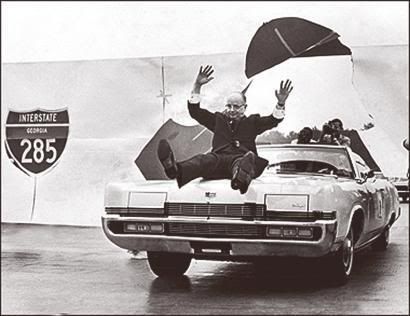
LESTER MADDOX - GOVERNOR BEFORE CARTER

Jimmy & the Yokels

If you really try to add up my political views and put a label on them, you’d probably eventually describe me more in accord with the European political spectrum than the (far narrower) American spectrum, as a “civil libertarian social democrat”. Even that doesn’t do it justice; I have a philosophical anarchistic streak a mile wide, and, to make the matter more complicated, feel that national (tribal, ethnic, et al) self-identity is very, very important to people, and is often defined for people by others with their own agendas. Such agendas have included dated ideas of imperialism and colonialism, to idealistic “flat world” misguided globalism, sometimes disguised as internationalism. Thus you would find me supporting the breakdown of the Soviet Union into its more natural constituent republics, likewise “Yugoslavia”, likewise “Iraq” (which I’ll save for another time – big topic), but you’ll find me in there pitching for Tibetan self-identity, Basque national aspirations, Kurdish nationalism (not really part of the Iraq story at all), and Irish nationalism. I’d probably favor separating Darfur from the Sudan, if the inhabitants seemed to be inclined that way. I even have a weakness for Quebec’s independence from Canada. This doesn’t mean that I in any way sanction intolerance or bigotry or condemn multi-ethnic societies that work; Switzerland and for that matter the United States are living proof that societies can be, or become, multi-ethnic without either collapsing into either the extremes of intolerance or some kind of boring melting pot of homogenized people.

But, before all the liberal-types get all excited about my “advocacy of the just national aspirations of oppressed peoples,” I should say it isn’t automatically true. Some “national identities” are phony, and mask something evil under their exterior. The rise of the Confederacy in America is an example of an elaborate sham of a national cause swiftly manufactured out of a glitch not settled at the founding of the American Republic, which allowed chattel slavery to continue to exist long after the European colonialists who had foisted it upon Africa and the Americas had been thrown out of the New World, and a more-or-less deliberate misreading of the check on central authority embodied in the ‘sovereign rights of the several states’ by the slave-holding class in the South which led to succession under the banner of “states rights” concealing a desire to hold onto the inhuman involuntary servitude they found so lucrative. Even they called it “the peculiar institution” and any claim to national identity the South may have had was thoroughly eclipsed by the necessity of abolishing that institution. That it was done ineptly, leading from America’s bloodiest War (so far), on to another century of barbaric Jim Crow laws and hideous racism is yet another story I’ll save for another time. I’ll say merely that we are still feeling the effects of frustrated Southern ‘Nationalism’ and, while the story of non slave-holding southern whites (the vast majority, who bore the brunt of the Civil War carnage) is little understood, even of parts of the South that resisted either the institution of slavery, or secession, or both, in the end I don’t support a cause merely because it is couched in terms of a purported ‘national identity’.

Which brings me to our friends the Palestinians, an increasingly popular cause among liberals, especially those too young to have the stench of the ovens at Auschwitz fresh in their nostrils, not remembering the desperate struggle against the Armies of Five Arab countries to realize Jewish national aspirations in their historic homeland in 1947, and utterly and abysmally ignorant of Middle Eastern history. I do not support the Palestinian cause, not one bit. The collective p.c. police now gasp. Why not? What’s different?

I could take the “easy route” and tell you, in the interest of candor, that I am Jewish, ethnically, religiously (albeit liberal and offbeat) and a lifelong ardent Zionist, meaning, I am consistent with my views on the Kurds, Armenians, Irish, Basques, Tibetans et al, I can remember when it was only the tiny knot of ‘hard leftists’ in the shadow world of tiny Marxist parties who supported *most* nationalist causes, except the State of Israel, leading me to write the little ditty: “We support all Third World nationalist coups/Unless, of course, they’re nationalist Jews”. They hated that one. Back then, much of the hard right (then out of power since Mr. Hoover’s depression) was anti-Zionist and suspected to be (gulp) (maybe) secretly anti-Semitic. Why, even National Review was pretty down on Israel. Then, along came the evangelical right’s current (and very suspect) love affair with Israel, under the leadership of St. George Bush the Younger, leader of our noble Crusade (his word, not mine) against the, uh, “axis of evil” that well known combine of Iran, Iraq and North Korea that suddenly appeared after 9/11, though the occasional skeptic pointed out that there do not appear to have been any demented Iraqis, Iranians or – good grief – Koreans (the image borders on the humorous) aboard those hijacked doomed airplanes, turned bombs.

Whoops, I’m talking about Iraq. Back to Israel.

For years, the Israel Lobby, so-called, in an effort to endear the tiny Jewish State to a skeptical gentile world would invoke the image of ‘tiny Israel’ always on the verge of oblivion at the hands of their Arab neighbors who, at the time, were largely secular and in the deep pockets of the Soviets. Well-meaning, the Anti Defamation League invoked this image along with the Nazi Holocaust, to good effect, until the short term memory of gentile America and post-war (now entirely, courtesy of Hitler) gentile Europe anesthetized the holocaust collective guilt-trip, and Israel committed the Ultimate Sin in the ‘tiny Israel’ argument-rather than having to get saved by the U.N. or NATO or something, they *won every war they got into*. Each time the Arab countries surrounding sent classical armies into battle to –quote- drive the Jews into the Sea –unquote- tiny bits of land were lost, a bit of Egypt (the Gaza Strip) and a bit of Jordan (the West Bank) and a hill in Syria (the Golan Heights) and, for awhile, the Sinai Peninsula (which nobody wants, except a few monks, a few Bedouin) WHICH Israel returned to Egypt for a peace treaty.

Now, friends, you need to look at the map of this region for a minute from my perspective. There is this little sliver of land named “Israel” now and, except when in the hands of various uninvited Empires (British, Ottoman Turk, Byzantine, Roman, Greek, Babylonian, Assyrian and Egyptian, in reverse order, was the home land of the Jewish people, Judeans, Jews, Israelites, a little nation of Hebrew-speaking monotheistic people who are, really, the only national group ever to self-govern this land. Some truly extinct aboriginal peoples, Canaanites, Philistines, et al, long ago lived here, but that was the age of city-states with kinship affiliations rather than national identity, and even here, they were usually if not always vassals to one or another of the Empires to the North or the South. So, we have this sliver of land that map-makers have to put the name of out in the Mediterranean, called “Israel” and this great, big Arab-speaking, Islamic extension of Arabia, taken (one might mention) at sword point, stretching from the Atlantic in North Africa to the borders of Iran, the home of the “other Islam”. It has also worked itself up, for yet another historical round of Jihad, Holy War, which happens ever few hundred years. They are – essentially – one nation – one might call it “Greater Arabia” but it is the Islamic Empire, and the truth about its relationship with Israel is that this huge conglomerate simply doesn’t want the Jews in their historic homeland, any more than they want largely Christian Darfur or non-Arab Kurds to be independent. The Arabs of the West Bank were self-identified either as “Arabs” or “Jordanian Arabs” until they lost a couple of wars, got this neat idea that they were, in a shadow-parody of Zionism, an oppressed nation-state called “Palestine” and, as the Islamist medievalist religious revival swept through the Arab World (aided and abetted by U.S. foreign policy geared to Cold War with godless communism, not hot war with religious fanatics), moved from secular, more or less pro-Soviet “Pan Arab Nationalism” to a bogus con game called “Palestinian Nationalism”.

This brings us, however jerkily, to my former State Governor, the Honorable Nobel Lauriat James Earl Carter, one-term governor of Georgia and one term President of the United States. Now, we must understand that Jimmah wasn’t “the Democratic Governor of Georgia” before becoming president (in those days, there was only one party in Georgia, the Democrats. Remember, in a long-ago time, there was that unpleasantness with Lincoln, the first Republican President), any more than the “nuclear scientist” he once professed to be. He was a man of his time, the first Georgia Governor who was not a segregationist (we’ll ignore New Dealer Ellis Arnall, a brilliant anomaly in the late 1940s) and who, further, relative to his immediate predecessor, Lester Maddox, the infamous segregationist, Carter was a paragon of liberal democracy. While one could well argue that his failure to prop up the Shah of Iran, an altogether disagreeable fellow who nevertheless lived in the 20th Century and was the last bulwark against the medieval superstitious revival that started on Carter’s watch with the Ayatollah Khomeini ushering Iran back to the middle ages and setting in motion a Jihad that today threatens the whole world of decency and the values of Western Civilization since the Enlightenment of the 18th Century, Jiimah is a fond icon to the current amnesiac liberal left, desperate for heroes of the caliber of FDR or JFK, but finding its eldest statesman to serve as president to be Jiimmih Cracker.

Now, the man has done some good stuff since leaving office – his election watch stuff, his continued contribution to good black-white relations, habitat for humanity, et al. (While back home in Atlanta he was lobbying running a highway through the one alternative community in urban Atlanta’s sprawl, the varied experiments in alternative living in Little Five Points – yet another blog entry; it led to armed resistance. The road in question wasn’t to Mecca, but to the Carter Center.) I understand the need for icons in an age of pale anemic disappointments like Kerry and Gore. In the end, we now see the halcyon days of Bill Clinton as the eye of the storm started by Reagan and jumping, like a tornado, from Bush to Bush. (For the record, I voted for Clinton, Clinton, Gore and Kerry in the last 4 presidential elections.)

But Jimmy Carter was an ineffective governor, with Lester Maddox running rings around him as Lieutenant Governor. As President he ushered in the Age of Reagan by his disgraceful anemia when we could really have stopped this Jihad thing before it got started, just as Eisenhower stopped the pro-Soviet clique from overthrowing the Shah with very little difficulty in the ‘50s. But, most of all, though his civil rights record as a Southern Governor and before that as a State Senator was exemplary for a white southerner of his generation with political aspirations…before it was cool to do so is HIGHLY commendable, but the rumor started when he was running for governor, when no one outside of Georgia would have cared, and no one outside of the Jewish community (larger in the South than many think—over 100,000 in Atlanta alone) would have noticed, but *I* heard it from my mother (a very, very reliable source-besides, she lived next door to some of Carter’s cabinet officials, who seemed to congregate in the same high rise, high security condo she lived in), and then everywhere.

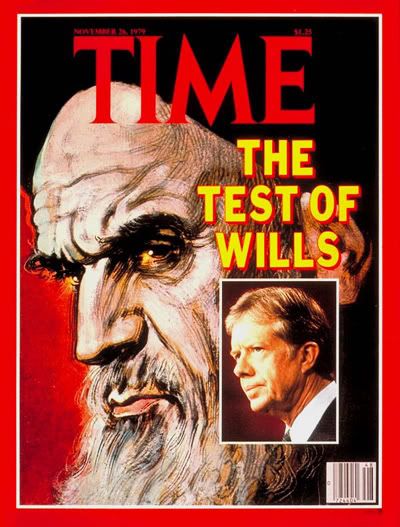
Jimmy Carter is an anti-Semite. Not “anti-Zionist” (he professes a ‘two-state’ solution). Something relatively rare in Georgia politics since the lynching of Leo Frank—a mainstream political figure who is, simply, anti- Semitic. “I don’t need the Jewish vote. I’ve got the Christian vote” he said, brother of an obscure evangelist that he is. More damning was his vow that he would “get the Jews” after he won the election in 1980. He didn’t. Ronald Reagan was probably wrong about…..everything, but he was more Hollywood than Skull & Bones, and one thing he was not was anti-Semitic. Carter didn’t get his chance then, but it is a crying shame that a career built on helping people should, in its twilight, be known for the new book with an old lie – an anti-Semitic tirade disguised as sympathy for the plight of the Arabs, I mean Jordanians, I mean “Palestinians” of Hammas and Al-Fatah who play at being a nation that never was and never should be, Palestine, which is no more than the Arab-Islamist beach head for driving the Jews into the sea. Again.

Jimmy Carter is a yokel.

http://www.youtube.com/watch?v=kY0ixG94cHE


Jimmy Carter's Jewish Problem

By Jason Maoz

JewishPress.com | November 30, 2006

For those with eyes to see, there were hints as far back as the 1976 presidential campaign of the trouble to come. Early that year, Harper’s magazine published “Jimmy Carter’s Pathetic Lies,” a devastating exposé of Carter’s record in Georgia by a then little-known journalist named Steven Brill.

Reg Murphy, who as editor of the Atlanta Constitution had kept a close eye on Carter’s rise in state politics, declared, “Jimmy Carter is one of the three or four phoniest men I ever met.”

Speechwriter Bob Shrum quit the Carter campaign after just a few weeks, disgusted with what he described as Carter’s penchant for fudging the truth. He also related that Carter, convinced the Jewish vote in the Democratic primaries would go to Senator Henry (“Scoop”) Jackson, had instructed his staff not to issue any more statements on the Middle East.

Jackson has all the Jews anyway,” Shrum quoted Carter as saying. “We get the Christians.”

Relations between Carter and Israel were tense from the outset of the Carter presidency. Carter’s hostility was evident to Israeli foreign minister Moshe Dayan, who in his memoir Breakthrough described a July 1977 White House meeting between Carter and Israeli officials. “You are more stubborn than the Arabs, and you put obstacles on the path to peace,’’ an angry Carter scolded Dayan and his colleagues.

“Our talk,” Dayan wrote, “lasted more than an hour and was most unpleasant. President Carter...launched charge after charge against Israel.”

On October 1, 1977, the U.S. and the Soviet Union unexpectedly issued a joint statement on the Middle East calling for an Arab-Israeli peace conference in Geneva, with the participation of Palestinian representatives. The communiqué marked the first time the U.S. officially employed the phrase “legitimate rights of the Palestinian people.”

Reaction in the U.S. was immediate and furious. “[A] political firestorm erupted,” wrote historian Steven Spiegel. “After American officials had worked successfully for years to reduce Russian influence over the Mideast peace process and in the area as whole, critics could not understand why the administration had suddenly invited Moscow to return.”

Egyptian President Anwar Sadat, who five years earlier had expelled thousands of Soviet military advisers from Egypt, neither liked nor trusted the Russians, and decided to kill the U.S.-Soviet initiative in the womb. His decision to go to Jerusalem to address the Knesset electrified the world and caught the Carter administration completely off guard.

Eventually the U.S. would broker what became known as the Camp David Accords and oversee the signing of the 1979 Egyptian-Israeli peace treaty. But Carter was far from a dispassionate third party. His disdain for Israeli prime minister Menachem Begin and near hero-worship of Sadat were clearly reflected in his demeanor and has informed nearly everything he’s written on the Middle East since leaving office.

In The Unfinished Presidency, his book about Carter’s post-White House activities, the liberal historian Douglas Brinkley provides a detailed account of the former president’s obsession with helping Palestinian terror chief Yasir Arafat polish his image. Carter, according to Brinkley, regularly advised Arafat on how to shape his message for Western journalists and even wrote some speeches for him.

Carter was also a vocal critic of Israeli policies and “view[ed] the unarmed young Palestinians who stood up against thousands of Israel soldiers as ‘instant heroes,’” wrote Brinkley. “Buoyed by the intifada, Carter passed on to the Palestinians, through Arafat, his congratulations.”

Former New York mayor Ed Koch, in his 1984 bestseller Mayor, recounted a conversation he had shortly before the 1980 election with Cyrus Vance, who’d recently resigned as Carter’s secretary of state. Koch told Vance that many Jews would not be voting for Carter because they feared “that if he is reelected he will sell them out.”

“Vance,” recalled Koch, “nodded and said, ‘He will.’ ”

In Dangerous Liaison: The Inside Story of the U.S.-Israeli Covert Relationship, Andrew and Leslie Cockburn revealed that during a March 1980 meeting with his senior political advisers, Carter, discussing his fading reelection prospects and his sinking approval rating in the Jewish community, snapped, “If I get back in, I’m going to [expletive] the Jews.”

Carter – such was the country’s good fortune – did not get back in. But as evidenced by his years of pro-Palestinian advocacy, reams of anti-Israel op-ed articles, and the release last week of his latest book/screed, Palestine Peace Not Apartheid, he’s been trying to [expletive] the Jews ever since.