Wednesday, February 7, 2007

THE GOLEM IN LEGEND & HISTORY


Golem Page

Kay E. Vandergrift

In order to understand Golem by David Wisniewski it is useful to read some of the research and writings about this very old legend and the issues connected to it. The story has connections to Jewish mysticism while also possessing a long thread in fictional literature. The excerpts provided below help to frame your understanding of this legend and the additional readings serve to fill out any gaps remaining.

ON JEWISH MYSTICISM

Cabala (Hebrew, "received tradition"), generically, Jewish mysticism in all its forms; specifically, the esoteric theosophy that crystallized in 13th-century Spain and Provence, France, around Sefer ha-zohar (The Book of Splendor), referred to as the Zohar, and generated all later mystical movements in Judaism. See Mysticism; Theosophy. The earliest known form of Jewish mysticism dates from the first centuries AD and is a variant on the prevailing Hellenistic astral mysticism, in which the adept, through meditation and the use of magic formulas, journeys ecstatically through and beyond the seven astral spheres. In the Jewish version, the adept seeks an ecstatic version of God's throne, the chariot (merkava) beheld by Ezekiel (see Ezekiel 1).

The Medieval Period

Medieval Spanish Cabala, the most important form of Jewish mysticism, is less concerned with ecstatic experience than with esoteric knowledge about the nature of the divine world and its hidden connections with the world of creation. Medieval Cabala is a theosophical system that draws on Neoplatonism and Gnosticism and is expressed in symbolic language. The system is most fully articulated in the Zohar, written between 1280 and 1286 by the Spanish Cabalist Moses de León, but attributed to the 2nd-century rabbi Simeon bar Yohai. The Zohar depicts the Godhead as a dynamic flow of force composed of numerous aspects. Above and beyond all human contemplation is God as he is in himself, the unknowable, immutable En Sof (Infinite). Other aspects or attributes, knowable through God's relation to the created world, emanate (see Emanation) from En Sof in a configuration of ten sefirot (realms or planes), through which the divine power further radiates to create the cosmos. Zoharic theosophy concentrates on the nature and interaction of the ten sefirot as symbols of the inner life and processes of the Godhead. Because the sefirot are also archetypes for everything in the world of creation, an understanding of their workings can illuminate the inner workings of the cosmos and of history. The Zohar thereby provides a cosmic-symbolic interpretation of Judaism and of the history of Israel in which the Torah and commandments, as well as Israel's life in exile, become symbols for events and processes in the inner life of God. Thus interpreted, the proper observance of the commandments assumes a cosmic significance.

From: Richard S. Sarason. "Cabala," Microsoft Encarta 97 Encyclopedia. Deluxe Edition. c. 1993-1996 Microsoft Corporation, Disc 1.


ON THE GOLEM AS PROTECTOR

In Jewish legend, an image or form that is given life through a magical formula. A golem frequently took the form of a robot, or automaton. In the Hebrew Bible (see Psalms 139:16) and in the Talmud, the term refers to an unformed substance. Its present meaning developed during the Middle Ages, when legends arose of wise men who could instill life in effigies by the use of a charm. The creatures were sometimes believed to offer special protection to Jews. The best-known of the golem stories concerned a Rabbi Löw of 16th-century Prague, who was said to have created a golem that he used as his servant.

From: Entry on "Golem" in Microsoft Encarta 97 Encyclopedia Deluxe Edition, c. 1993-1996 Microsoft Corporation, Disc 1.


ON THE NATURE OF THE GOLEM

In the development of the later legend of the golem there are three outstanding points: (1) The legend is connected with earlier tales of the resurrection of the dead by putting the name of God in their mouths or on their arm, and by removing the parchment containing the name in reverse and thus causing their death. Such legends were widespread in Italy from the tenth century (in Megillar Ahima'az). (2) It is related to ideas current in non-Jewish circles concerning the creation of an alchemical man (the "homunculus" of Paracelsus). (3) The golem, who is the servant of his creator, developed dangerous natural powers; he grows from day to day, and in order to keep him from overpowering the members of the household he must be restored to his dust by removing or erasing the alef from his forehead. Here, the idea of the golem is joined by the new motive of the unrestrained power of the elements which can bring about destruction and havoc. Legends of this sort appeared first in connection with Elijah, rabbi of Chelm (d. 1583).

From: "Golem" entry in the Encyclopedia Judaica. Volume 7. Jerusalem, Israel: Keter Publishing House, 1971, pp. 754-755.


VARIANT ON THE GOLEM LEGEND

A variant of the Golem legend gives another explanation for the Maharal's [Rabbi Loew] decision to return the clay monster to the dust lie came from.[sic] Although the creature was mighty in strength, supernatural in prescience, and ever alert in following the orders of his Cabalistic creator, so that he saved the Jews of Prague from many a calamity, nonetheless, his creator decided to "unmake" him because he had grown afraid of the creature he had created, for the Golem, waxing drunk with the immense power he was wielding, menaced the entire Jewish community, even trying to bend the Maharal to his will, which had now turned evil and destructive. Thereupon, using the secret gematria of Cabalistic formulas for the second time, the Maharal returned the clay hulk of his creature to its original inanimate condition by withdrawing from its mouth the Shem, the life-creating, ineffable Name of God that he had placed there when first he made him.

From: "The Golem," in The Book of Jewish Knowledge. Nathan Ausubel. On The First Electronic Jewish Bookshelf, Scanrom Publishers, 1994,Cd-Rom.


LITERARY ASPECTS OF THE LEGEND OF THE GOLEM

The Legends concerning the golem, especially in their later forms, served as a favorite literary subject, at first in German literature-of both Jews and non-Jews-in the 19th century, and afterward in modern Hebrew and Yiddish literature. To the domain of belles lettres also belongs the book Nifla'ot Maharal im ha-Golem ("The Miraculous Deeds of Rabbi Loew with the Golem"; 1909), which was published by Judith Rosenberg as an early manuscript but actually was not written until after the blood libels of the 1890s. The connection between the golem and the struggle against ritual murder accusations is entirely a modern literary invention. In this literature questions are discussed which had no place in the popular legends (e.g., the golem's love for a woman), or symbolic interpretations of the meaning of the golem were raised (the unredeemed, unformed man; the Jewish people; the working class aspiring for its liberation).

Interest in the golem legend among writers, artists, and musicians became evident in the early 20th century. The golem was also invariably the benevolent robot of the later Prague tradition and captured the imagination of writers active in Austria, Czechoslovakia, and German. . . . The outstanding work about the golem was the novel entitled Der Golem (1915; Eng. 1928) by the Bavarian writer Gustav Meyrink (1868-1932), who spent many years in Prague. Meyrink's book, notable for its detailed description and nightmare atmosphere, was a terrifying allegory about man's reduction to an automaton by the pressures of modern society.

From: "Golem" entry in the Encyclopedia Judaica. Volume 7. Jerusalem, Israel: Keter Publishing House, 1971, pp. 754-755.

This dissertation examines the ways in which contemporary Jewish American authors rewrite traditional Jewish narratives to both reflect and revise current conceptions of the self and the Jew. Far from denying a connection to Jewish tradition, these authors instead shift the focus, articulating a Jewishness that has less to do with their conception of a specifically revealed will of God than with their desire to integrate inherited stories with those emerging from contemporary Jewish life. I argue that the texts being granted authority have changed, expanded to include narratives of collective memory that stand outside of the sacred canon but nevertheless retain both causal and normative roles in the construction of contemporary Jewish identity.

. . .

[Grauer] contends that by reworking the Jewish legend of the golem to allow for female creation, Cynthia Ozick (in "Puttermesser and Xanthippe") and Marge Piercy (in He, She and It) speak to perceived gender inequities within Judaism while still maintaining that traditional narratives can fruitfully inform contemporary female identity.

From: Grauer, Tresa Lynn. One and the Same Openness: Narrative and Tradition in Contemporary Jewish American Literature. Ph.D. dissertation, University of Michigan, 1995, abstract page.


ON MEDIA AND THE GOLEM LEGEND

This is a poster for Paul Wehener's lighthearted 1917 film, "The Golem and the Dancer"--an authentic myth that worked loose from its religious moorings to serve a variety of symbolic functions.

In an article by John Gross entitled "The Golem--As Medieval Hero, Frankenstein Monster and Proto-Computer," he reviews "Golem! Danger, Deliverance and Art," an exhibition at the Jewish Museum in April 1988 in New York City displaying memorable images of the German filmmaker Paul Wegener along with many others.


"Between 1914 and 1920 Wegener made three movies on the golem theme: first "The Golem," set in 29th century, then "The Golem and the Dancer," a lighthearted fantasy, and finally "The Golem: How He Came into the World," which goes back to the 16th century and the story of Rabbi Loew. Only the last of the three has survived. It can be seen on video at the Jewish Museum, and it makes an extremely pwerful impression. The golem, played by Wegener himself, is a complelling figure, with his stiff movements and squared-off haricut (remininscent, as Emily Bilski [curator of the exhibit] says, of figures in Egyptian art, though it also makes him look rather like a medieval serf.)"

. . .

"There are golems and golems. A third version, very different from eithr Wegener's or Steiner-Prag's can be found in a verse play, "The Golem," published in New York in 1921 by the Yiddish poet H. Leivick. According to Leivick's stage directions, he visualized the golem as a giant with a black curly beard, a dull stare and a fixed smile that was somehow on the verge of tears. (One of the artists who translated this conception into pictorical terms was the celebrated stage designer Boris Aronson; in the late 1920's he devised some striking sets and costumes for a production of the play that unfortunately never materialized.) For Levick, the golem was a false savior, who promised deliverance but deliverd violence: by the sound of it, the play is heavy with Jewish foreboding. And by the mid-1930's there was a sense of looming calamity in Czechoslovak portrayals of the golem, too--in the fine painting by the surrealist Frantisek Hudecek, for instance, which shows men (or androids) being hammered into life in some kind of infernal smithy."

From The New York Times, Sunday December 4, 1988, p.41.


ON RITUAL MURDER OR THE BLOOD LIBEL LEGEND

Among the prime candidates for placement under the rubric of the folklore of evil, I would rank at or very near the top of the list the so-called blood libel legend. Other phrases designating this vicious legend include blood accusations and ritual murder (accusation). These terms are used almost interchangeably but there are several scholars who have sought to distinguish between ritual murder and blood libel, arguing that ritual murder refers to a sacrificial murder in general whereas the blood libel entails specific use of the blood of the victim. In the case of alleged Jewish ritual murder, the blood motivation is nearly always present which presumably accounts for the equally common occurrence of both ritual murder and blood libel as labels.

. . .

The blood libel legend is not only the basis of ongoing festivals, but it has also been memorialized in church decoration. Legends proclaiming the Jewish "ritual murder" of Christian children or the profanation or desecration of holy wafers are celebrated in various European towns in such artistic forms as tapestries or stained glass church windows. For example, there are such windows or pictures or tapestries ornamenting the choir of the Saint Michael-Saint Gudule Cathedral in Brussels, a ceiling fresco in the small Tyrol village of Judenstein, paintings in a church sanctuary in the Vienna suburb of Korneuberg, and a stained glass window in a Paris church chapel.

. . .

It would be one thing if this classic bit of anti-Semitic folklore existed only in ballad or legend form, but the sad truth is that what has been so often described in legend and literature is also alleged to have occurred in life. There have not been tens, but hundreds of actual cases of blood libel tried in various courts in various countries. The map of Western and Eastern Europe and the Near East is profusely dotted with sites where ritual murders were said to have occurred.

. . .

The sad truth about the blood libel legend is not so much that it was created-the need for such a psychological projection on the part of Christians is evident enough-but that it was believed to be true and accepted as such and that the lives of many individual Jews were adversely affected by some bloodthirsty Christians who believed or pretended to believe in the historicity of the blood libel legend.

From: Alan Dundes. "The Ritual Murder or Blood Libel Legend: A Study of Anti-Semitic Victimization through Projective Inversion," in The Blood Libel Legend: A Casebook in Anti-Semitic Folklore. Edited by Alan Dundes, pp. 337, 339, 341, 360.


BIBLIOGRAPHY ABOUT AND ADULT VERSIONS OF,
THE GOLEM

Alexander, Tamar. "A Legend of the Blood Libel in Jerusalem: A Study of a Process of Folk-Tale Adaptation," International Folklore Review: Folklore Studies From Overseas. Volume 5 (1987):60-74.

Allison, Alida. "Guess Who's Coming to Dinner? The Golem as Family Member in Jewish Children's Literature," Lion and the Unicorn. Volume 14, No. 2 (December 1990): 92-97.

Anthony, Piers. Golem in the Gears. New York: Ballantine, 1986.

Basso, Eric. The Golem Triptych: A Dramatic Trilogy. Raleigh, NC: Leaping Dog Press, 2005.

Bilski, Emily D. Golem! Danger, Deliverance, and Art. Foreword by Isaac Bashevis Singer; with essays by Moshe Idel and Elfi Ledig.New York: Jewish Museum, 1988.

Bloch, Hayim, The Golem; Legends of the Ghetto of Prague. Translated from the German by Harry Schneiderman. With prefatory note by Hans Ludwig Held. Blauvelt, NY: Rudolf Steiner Publications, 1972.

Borges, Jorge Luis. The Golem. New York: Grove Press, 1967.

Chabon, Michael. The Amazing Adventures of Kavalier & Clay. New York: Random House, 2000.

Dundes, Alan, Ed. The Blood Libel Legend: A Casebook in Anti-Semitic Folklore. Madison, WI: University of Wisconsin Press, 1991.

Goldsmith, Arnold L. The Golem Remembered, 1909-1980: Variations of a Jewish Legend. Detroit, MI: Wayne State University Press, 1981.

Goldsmith, Arnold. "Elie Wiesel, Rabbi Judah Lowe, and the Golem of Prague," Studies in American Jewish Literature. Volume 5 (1986):15-28.

Hamill, Pete. Snow in August: A Novel. Boston, MA: Little Brown, 1997.

Haraway, Donna. "A Manifesto for Cyborgs: Science, Technology and Socialist Feminism in the 1980's" in Feminism/Postmodernism. Linda Nicholson, Ed., New York: Routledge, 1990, pp. 190-233.

Idel, Moshe. Golem: Jewish Magical and Mystical Traditions on the Artificial Anthropoid. Albany: State University of New York Press, 1990.

Jacoby, Jay. Selected Resources for the Study of the Legends of the Golem and Lilith. [microform} Charlotte NC: J. Jacoby, 1984. [Nineteenth Annual Convention, Association of Jewish Libraries, June 24-27, 1984, Atlanta, Georgia.]

Jacoby, Jay. "The Golem in Jewish Literature," Judaica Librarianship. Volume 1, No. 2 (Spring 1984):100-04.

Krause, Maureen T., Ed. "Rabbi Loew and His Legacy: The Golem in Literature and Film." SERIES: Journal of the Fantastic in the Arts ; v. 7, nos. 2 and 3. Tallahassee, FL: Florida State University, 1996.

Meyrink, Gustav. The Golem. Translated by Mike Mitchell and with an introduction and chronology by Robert Irwin. Sawtry, Cambs: Dedalus ; Riverside, CA : Ariadne, 1995.

Piercy, Marge. He, She, and It. New York: Knopf, 1991.

Plank, Robert. "The Golem and the Robot." Literature and Psychology. vol. 15 (1965).

Posner, Marcia W. 'The Golem in Art: An Interview with Beverly Brodsky, Creator of Her Own Golem," Judaica Librarianship. Volume 1, No. 2 (Spring 1984):104-06.

Ripellino, Angelo Maria. Magic Prague. Berkeley, CA: University of California Press, 1994.

Rowen, Norma. "The Making of Frankenstein's Monster: Post-Golem, Pre-Robot," in Nicholas Ruddick, Ed. State of the Fantastic: Studies in the Theory and Practice of Fantastic Literature and Film, Westport, CT: Greenwood Press, 1992, pp.169-77.

Rubens, A. Alfred. A History of Jewish Costume. New York: Crown, 1973.

Schaffer, Carl. "Leivick's The Golem and the Golem Legend," in Patrick D. Murphy, Ed. Staging the Impossible: The Fantastic Mode in Modern Drama. Westport, CT: Greenwood Press, 1992, pp. 137-49.

Scholem, Gershom Gerhard. On the Kabbalah and Its Symbolism. [Zur Kabbala und ihrer Symbolik.] Translated by Ralph Manheim ; Forward by Bernard McGinn. New York : Schocken Books, 1996.

Sherwin, Byron L. The Golem Legend: Origins and Implications. Lanham, MD: University Press of America, 1985.

Thieberger, Bedrich. The Great Rabbi Loew of Prague: His Life and Work and the Legend of the Golem. New York: Farrar, Straus and Young, 1955.

Teitelbaum, Richard. Golem. Sound Recording: An Interactive Opera. New York: Tzadik, 1995.

Trachtenberg, Joshua. Jewish Magic and Superstition: A Study in Folk Religion. New York: Atheneum, 1970.

Wechsberg, Joseph. Prague: The Mystical City. New York: Macmillan, 1971.

Wiener, Norbert. God and Golem, Inc.: A Comment on Certain Points Where Cybernetics Impinges on Religion. Cambridge, MA: M I T Press, 1988.

Winkler, Gershon. The Golem of Prague: A New Adaptation of the Documented Stories of the Golem of Prague. Introductory Overview by Gershon Winkler. illustrated by Yochanan Jones. New York : Judaica Press, 1980.

Winkler, Gershon, The Sacred Stones: The Return of the Golem: A Mystical Novel. Illus. by Yosef Dershowitz. New York: Judaica Press, 1991.


February 7, 107
Created June 2, 1997 and is continuously revised
SCILS, Rutgers, The State University of New Jersey

Tuesday, February 6, 2007

billie holiday's does "Strange Fruit"

As dry and beautiful as the blues get/Billie is gone/But with us yet. Henry_Allen

BIOGRAPHY written by SCOTT YANOW

Billie Holiday remains (four decades after her death) the most famous of all jazz singers. "Lady Day" (as she was named by Lester Young) had a small voice and did not scat but her innovative behind-the-beat phrasing made her quite influential. The emotional intensity that she put into the words she sang (particularly in later years) was very memorable and sometimes almost scary; she often really did live the words she sang.

Her original name and birthplace have been wrong for years but are listed correctly above thanks to Donald Clarke's definitive Billie Holiday biography Wishing on the Moon. Holiday's early years are shrouded in legend and rumours due to her fanciful ghost written autobiography Lady Sings the Blues but it is fair to say that she did not have a stable life. Her father Clarence Holiday (who never did marry her mother) played guitar with Fletcher Henderson and abandoned his family early on while her mother was not a very good role model. Billie essentially grew up alone, feeling unloved and gaining a lifelong inferiority complex that led to her taking great risks with her personal life and becoming self-destructive.

Holiday's life becomes clearer after she was discovered by John Hammond singing in Harlem clubs. He arranged for her to record a couple of titles with Benny Goodman in 1933 and although those were not all that successful, it was the start of her career. Two years later she was teamed with a pickup band led by Teddy Wilson and the combination clicked. During 1935-42 she would make some of the finest recordings of her career, jazz-oriented performances in which she was joined by the who's who of swing. Holiday sought to combine together Louis Armstrong's swing and Bessie Smith's sound; the result was her own fresh approach. In 1937 Lester Young and Buck Clayton began recording with Holiday and the interplay between the three of them was timeless.

Lady Day was with Count Basie's Orchestra during much of 1937 but, because they were signed to different labels, all that exists of the collaboration are three songs from a radio broadcast. She worked with Artie Shaw's Orchestra for a time in 1938 but the same problem existed (only one song was recorded) and she had to deal with racism, not only during a Southern tour but in New York too. She had better luck as a star attraction at Cafe Society in 1939. Holiday made history that year by recording the horribly picturesque "Strange Fruit," a strong anti-racism statement that became a permanent part of her repertoire. Her records of 1940-42 found her sidemen playing a much more supportive role than in the past, rarely sharing solo space with her.

Although the settings were less jazz-oriented than before (with occasional strings and even a background vocal group on a few numbers) Billie Holiday's voice was actually at its strongest during her period with Decca (1944-49). She had already introduced "Fine and Mellow" (1939) and "God Bless the Child" (1941) but it was while with Decca that she first recorded "Lover Man" (her biggest hit), "Don't Explain," "Good Morning Heartache" and her renditions of "Ain't Nobody's Business If I Do," "Them There Eyes" and "Crazy He Calls Me." Unfortunately it was just before this period that she became a heroin addict and she spent much of 1947 in jail. Due to the publicity she became a notorious celebrity and her audience greatly increased. Lady Day did get a chance to make one Hollywood movie (New Orleans) in 1946 and, although she was disgusted at the fact that she was stuck playing a maid, she did get to perform with her early idol Louis Armstrong.

Billie Holiday's story from 1950 on is a gradual downhill slide. Although her recordings for Norman Granz (which started in 1952) placed her once again with all-star jazz veterans (including Charlie Shavers, Buddy DeFranco, Harry "Sweets" Edison and Ben Webster), her voice was slipping fast. Her unhappy relationships distracted her, the heroin use and excessive drinking continued and by 1956 she was way past her prime. Holiday had one final burst of glory in late 1957 when she sang "Fine and Mellow" on The Sound of Jazz telecast while joined by Lester Young (who stole the show with an emotional chorus), Ben Webster, Coleman Hawkins, Gerry Mulligan and Roy Eldridge, but the end was near. Holiday's 1958 album Lady in Satin found the 43-year old singer sounding 73 (barely croaking out the words) and the following year she collapsed; in the sad final chapter of her life she was placed under arrest for heroin possession while on her deathbed!

Fortunately Billie Holiday's recordings have been better treated than she was during her life and virtually all of her studio sides are currently available on CD.

Scott Yanow

Monday, February 5, 2007

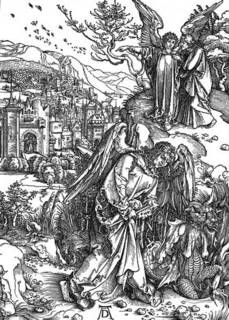
Late Gothic Hell

LATE GOTHIC PAINTING

Somehow - maybe it was the times - the late gothic artists were better at doing Hell than anything else. A stange surreal eroticism is probably the attraction to modern fans of Bosch in particular, along with the outre nature of his work that anticipates 20th century masters like Dali. Henry_Allen

Late Gothic Painting

Gerard David, Hieronymus Bosch, and Matthias Grünewald were all early 16th-

century artists and contemporaries of the other Northern artists Albrecht Dürer,

Lucas Cranach, and Hans Holbein. However, the paintings of the former artists

maintain connections with the Gothic tradition, while the latter were strongly

influenced by the Italian Renaissance. Thus the two strands of Gothic and

Renaissance art coexisted in Northern Europe in the first half of the 16th

century.
Hieronymus, or Jerome, Bosch, b. c.1450, d. August 1516, spent his entire

artistic career in the small Dutch town of Hertogenbosch, from which he derived

his name.

At the time of his death, Bosch was internationally celebrated as an eccentric

painter of religious visions who dealt in particular with the torments of hell.

During his lifetime Bosch's works were in the inventories of noble families of

the Netherlands, Austria, and Spain, and they were imitated in a number of

paintings and prints throughout the 16th century, especially in the works of

Pieter Bruegel the Elder.

Bosch was a member of the religious Brotherhood of Our Lady, for whom he painted

several altarpieces for the Cathedral of Saint John's, Hertogenbosch, all of

which are now lost. The artist probably never went far from home, although

records exist of a commission in 1504 from Philip the Handsome (later king of

Castile), for a lost Last Judgment altarpiece. None of Bosch's pictures are

dated, although the artist signed many of them.

http://www.ibiblio.org/wm/paint/tl/gothic/late.html

Philip K Dick, Gnostic Futurist

from http://www.themodernword.com/scriptorium/dick_biblio.html
Bibliography (Ordered by writing date)
Short Story Collections

A Handful of Darkness (w. 1952-1954, p. 1955)

The Book of Philip K. Dick (w. 1952-1955, p. 1973)

The Variable Man and Other Stories (w. 1952-55, p. 1957)

Dr. Futurity (w. 1953-59, p. 1954)

The Preserving Machine (w. 1953-66, p. 1969)

The Best of Philip K. Dick (w. 1952-1973, p. 1977)

The Golden Man (w. 1952-1973, p. 1980)

I Hope I Shall Arrive Soon (w. 1953-1980, p. 1985)

Novels

Return to Lilliput (w. 1941)

The Earthshaker (w. 1948)

Gather Yourself Together (w. 1949)

Voices From The Street (w. 1952)

Solar Lottery (w. 1953, p. 1955)

The Cosmic Puppets (w. 1953, p. 1957)

Mary and the Giant (w. 1953, p. 1987)

Vulcan's Hammer (w. 1953-54, p. 1960)

The World Jones Made (w. 1954, p. 1956)

Eye In The Sky (w. 1955, p. 1957)

The Man Who Japed (w. 1955, p. 1956)

A Time For George Stavros (w. 1955)

Pilgrim on the Hill (w. 1956)

The Broken Bubble of Thisbe Holt (w. 1956, p. 1988)

Puttering About In Small Land (w. 1957, p. 1985)

Nicholas and the Higs (w. 1957)

Time Out of Joint (w. 1958, p. 1959)

In Milton Lumky Territory (w. 1958, p. 1985)

Confessions of a Crap Artist (w. 1959, p. 1975)

The Man Whose Teeth Were All Exactly Alike (w. 1960, p. 1984)

Humpty Dumpty In Oakland (w. 1960, p. 1987)

The Man In The High Castle (w. 1961, p. 1962)

We Can Build You (w. 1962, p. 1969)

Martian Time-Slip (w. 1962-63, p. 1964)

Dr. Bloodmoney (w. 1963, p. 1965)

The Game-Players of Titan (w. 1963, p. 1963)

The Simulacra (w. 1963, p. 1964)

Clans of the Alphan Moon (w. 1963-64, p. 1964)

The Crack in Space (w. 1963-1964, p. 1966)

The Three Stigmata of Palmer Eldritch (w. 1964, p. 1965)

The Zap Gun (w. 1964, p. 1967)

The Penultimate Truth (w. 1964, p. 1964)

Now Wait For Last Year (w. 1963-65, p. 1966)

Counter-Clock World (w. 1965, p. 1967)

The Unteleported Man (w. 1964-1965, p. 1966)

The Ganymede Takeover (with Ray Nelson, w. 1964-1966, p. 1967)

Do Androids Dream of Electric Sheep? (w. 1966, p. 1968)

The Glimmung of Plowman's Planet (w. 1966, p. 1988)

Ubik (w. 1966, p. 1969)

Galactic Pot-Healer (w. 1967-1968, p. 1969)

A Maze of Death (w. 1968, p. 1970)

Our Friends From Frolix 8 (w. 1968-1969, p. 1970)

The Dark Haired Girl (w. 1972, p. 1988)

Flow My Tears, The Policeman Said (w. 1970-1973, p. 1974)

A Scanner Darkly (w. 1973-1975, p. 1977)

Deus Irae (with Roger Zelazny, w. 1964-1975, p. 1976)

Radio Free Albemuth (w. 1976, p. 1985)

VALIS (w. 1978, p. 1981)

The Divine Invasion (w. 1980, p. 1981)

The Transmigration of Timothy Archer (w. 1981, p. 1982)

The Owl in Daylight (unfinished)

--Adapted from Divine Invasions, by Lawrence Sutin; Harmony Books, 1989

Also of great interest -
http://paulwilliams.com/pkds.html

Sunday, February 4, 2007

A FLATLAND STORY FOR A FLATLAND TIME

This little film promo follows on one of my favorite classical 'novels' - "Flatland" - a look at the universe from a two-dimensional perspective, and a hint about The Nature of Reality. Enjoy...and ponder. To be trite, see the film, but read the book first:

Flatland (1884)
By Edwin A. Abbott (1838-1926)

Section 22

How I then tried to diffuse the Theory of Three Dimensions by other means, and of the result

MY FAILURE with my Grandson did not encourage me to communicate my secret to others of my household; yet neither was I led by it to despair of success. Only I saw that I must not wholly rely on the catch-phrase, "Upward, not Northward," but must rather endeavour to seek a demonstration by setting before the public a clear view of the whole subject; and for this purpose it seemed necessary to resort to writing.

So I devoted several months in privacy to the composition of a treatise on the mysteries of Three Dimensions. Only, with the view of evading the Law, if possible, I spoke not of a physical Dimension, but of a Thoughtland whence, in theory, a Figure could look down upon Flatland and see simultaneously the insides of all things, and where it was possible that there might be supposed to exist a Figure environed, as it were, with six Squares, and containing eight terminal Points. But in writing this book I found myself sadly hampered by the impossibility of drawing such diagrams as were necessary for my purpose: for of course, in our country of Flatland, there are no tablets but Lines, and no diagrams but Lines, all in one straight Line and only distinguishable by difference of size and brightness; so that, when I had finished my treatise (which I entitled, "Through Flatland to Thoughtland") I could not feel certain that many would understand my meaning.

Meanwhile my wife was under a cloud. All pleasures palled upon me; all sights tantalized and tempted me to outspoke treason, because I could not compare what I saw in Two Dimensions with what it really was if seen in Three, and could hardly refrain from making my comparisons aloud. I neglected my clients and my own business to give myself to the contemplation of the mysteries which I had once beheld, yet which I could impart to no one, and found daily more difficult to reproduce even before my own mental vision.

One day, about eleven months after my return from Spaceland, I tried to see a Cube with my eye closed, but failed; and though I succeeded afterwards, I was not then quite certain (nor have I been ever afterwards) that I had exactly realized the original. This made me more melancholy than before, and determined me to take some step; yet what, I knew not. I felt that I would have been willing to sacrifice my life for the Cause, if thereby I could have produced conviction. But if I could not convince my Grandson, how could I convince the highest and most developed Circles in the land?

And yet at times my spirit was too strong for me, and I gave vent to dangerous utterances. Already I was considered heterodox if not treasonable, and I was keenly alive to the danger of my position; nevertheless I could not at times refrain from bursting out into suspicious or half-seditious utterances, even among the highest Polygonal or Circular society. When, for example, the question arose about the treatment of those lunatics who said that they had received the power of seeing the insides of things, I would quote the saying of an ancient Circle, who declared that prophets and inspired people are always considered by the majority to be mad; and I could not help occasionally dropping such expressions as "the eye that discerns the interiors of things," and "the all-seeing land"; once or twice I even let fall the forbidden terms "the Third and Fourth Dimensions." At last, to complete a series of minor indiscretions, at a meeting of our Local Speculative Society held at the palace of the Prefect himself,--some extremely silly person having read an elaborate paper exhibiting the precise reasons why Providence has limited the number of Dimensions to Two, and why the attribute of omnividence is assigned to the Supreme alone--I so far forgot myself as to give an exact account of the whole of my voyage with the Sphere into Space, and to the Assembly Hall in our Metropolis, and then to Space again, and of my return home, and of everything that I had seen and heard in fact or vision. At first, indeed, I pretended that I was describing the imaginary experiences of a fictitious person; but my enthusiasm soon forced me to throw off all disguise, and finally, in a fervent peroration, I exhorted all my hearers to divest themselves of prejudice and to become believers in the Third Dimension.

Need I say that I was at once arrested and taken before the Council?

Next morning, standing in the very place where but a very few months ago the Sphere had stood in my company, I was allowed to begin and to continue my narration unquestioned and uninterrupted. But from the first I foresaw my fate; for the President, noting that a guard of the better sort of Policemen was in attendance, of angularity little, if at all, under 55 degrees, ordered them to be relieved before I began my defence, by an inferior class of 2 or 3 degrees. I knew only too well what that meant. I was to be executed or imprisoned, and my story was to be kept secret from the world by the simultaneous destruction of the officials who had heard it; and, this being the case, the President desired to substitute the cheaper for the more expensive victims.

After I had concluded my defence, the President, perhaps perceiving that some of the junior Circles had been moved by evident earnestness, asked me two questions:--

1. Whether I could indicate the direction which I meant when I used the words "Upward, not Northward"?

2. Whether I could by any diagrams or descriptions (other than the enumeration of imaginary sides and angles) indicate the Figure I was pleased to call a Cube?

I declared that I could say nothing more, and that I must commit myself to the Truth, whose cause would surely prevail in the end.

The President replied that he quite concurred in my sentiment, and that I could not do better. I must be sentenced to perpetual imprisonment; but if the Truth intended that I should emerge from prison and evangelize the world, the Truth might be trusted to bring that result to pass. Meanwhile I should be subjected to no discomfort that was not necessary to preclude escape, and, unless I forfeited the privilege by misconduct, I should be occasionally permitted to see my brother who had preceded me to my prison.

Seven years have elapsed and I am still a prisoner, and--if I except the occasional visits of my brother--debarred from all companionship save that of my jailers. My brother is one of the best of Squares, just sensible, cheerful, and not without fraternal affection; yet I confess that my weekly interviews, at least in one respect, cause me the bitterest pain. He was present when the Sphere manifested himself in the Council Chamber; he saw the Sphere's changing sections; he heard the explanation of the phenomena then give to the Circles. Since that time, scarcely a week has passed during seven whole years, without his hearing from me a repetition of the part I played in that manifestation, together with ample descriptions of all the phenomena in Spaceland, and the arguments for the existence of Solid things derivable from Analogy. Yet--I take shame to be forced to confess it--my brother has not yet grasped the nature of Three Dimensions, and frankly avows his disbelief in the existence of a Sphere.

Hence I am absolutely destitute of converts, and, for aught that I can see, the millennial Revelation has been made to me for nothing. Prometheus up in Spaceland was bound for bringing down fire for mortals, but I--poor Flatland Prometheus--lie here in prison for bringing down nothing to my countrymen. Yet I exist in the hope that these memoirs, in some manner, I know not how, may find their way to the minds of humanity in Some Dimension, and may stir up a race of rebels who shall refuse to be confined to limited Dimensionality.

That is the hope of my brighter moments. Alas, it is not always so. Heavily weights on me at times the burdensome reflection that I cannot honestly say I am confident as to the exact shape of the once-seen, oft-regretted Cube; and in my nightly visions the mysterious precept, "Upward, not Northward," haunts me like a soul-devouring Sphinx. It is part of the martyrdom which I endure for the cause of Truth that there are seasons of mental weakness, when Cubes and Spheres flit away into the background of scarce-possible existences; when the Land of Three Dimensions seems almost as visionary as the Land of One or None; nay, when even this hard wall that bars me from my freedom, these very tablets on which I am writing, and all the substantial realities of Flatland itself, appear no better than the offspring of a diseased imagination, or the baseless fabric of a dream.

EXPERIMENTAL CINEMA 2

a little music vid of marcel duchamps experimental cinema from the 1920s. set to venetian snares szamar madar, from http://www.youtube.com/profile?user=sacrificaltotem

Thursday, February 1, 2007

THE PERSIAN EMPIRE III

BUT WHERE WILL THE SOLDIERS COME FROM?

We don't have the infrastructure to sandbag the levys, and thus an American city

dies of neglect. We've used up our National Guard and Reserves. Wjhat soldiers

we have in the field are in Korea or in the *real* war against Islamist

terrorism in Afghanistan. Now President Bush, in an increasingly surreal

national nightmare, sounds about Iran a lot like he did about Iraq, before the

invasion. America has the will neither to resort to a military draft nor to the

dangerous precedent of unleashing our own nuclear arsenal. Yet talk of war with

Iran is in the air. The theocracy in Iran is an abomination. It would never

have come into being if we had had a more pragmatic view in the late 1970s.

Thank you, Jimmy Carter, exit the Shah , enter the

dragon of medievalist Islamo-fascism.

. But, here we are, post-Soviet, post 9/11

and, it seems, post reality. We have Bush. Night Falls. Henry_Allen

Don't try to solve serious matters in the middle of the night.
- Philip K. Dick


consortiumnews.com

Iran Clock Is Ticking

By Robert Parry
January 31, 2007

While congressional Democrats test how far they should go in challenging George

W. Bush’s war powers, the time may be running out to stop Bush from ordering a

major escalation of the Middle East conflict by attacking Iran.

Military and intelligence sources continue to tell me that preparations are

advancing for a war with Iran starting possibly as early as mid-to-late

February. The sources offer some differences of opinion over whether Bush might

cite a provocation from Iran or whether Israel will take the lead in launching

air strikes against Iran’s nuclear facilities.

But there is growing alarm among military and intelligence experts that Bush

already has decided to attack and simply is waiting for a second aircraft

carrier strike force to arrive in the region – and for a propaganda blitz to

stir up some pro-war sentiment at home.

One well-informed U.S. military source called me in a fury after consulting with

Pentagon associates and discovering how far along the war preparations are. He

said the plans call for extensive aerial attacks on Iran, including use of

powerful bunker-busting ordnance.

Another source with a pipeline into Israeli thinking said the Iran war plan has

expanded over the past several weeks. Earlier thinking had been that Israeli

warplanes would hit Iranian nuclear targets with U.S. forces in reserve in case

of Iranian retaliation, but now the strategy anticipates a major U.S. military

follow-up to an Israeli attack, the source said.

Both sources used the same word “crazy” in describing the plan to expand the war

to Iran. The two sources, like others I have interviewed, said that attacking

Iran could touch off a regional – and possibly global – conflagration.

“It will be like the TV show ‘24’,” the American military source said, citing

the likelihood of Islamic retaliation reaching directly into the United States.

Though Bush insists that no decision has been made on attacking Iran, he offered

similar assurances of his commitment to peace in the months before invading Iraq

in 2003. Yet leaked documents from London made clear that he had set a course

for war nine months to a year before the Iraq invasion.

In other words, Bush’s statements that he has no plans to "invade" Iran and that

he’s still committed to settle differences with Iran over its nuclear program

diplomatically should be taken with a grain of salt.

There is, of course, the possibility that the war preparations are a game of

chicken to pressure Iran to accept outside controls on its nuclear program and

to trim back its regional ambitions. But sometimes such high-stakes gambles lead

to miscalculations or set in motion dynamics that can't be controlled.

‘You Will Die’

The rapidly deteriorating situation in Iraq is seen as another factor pressing

on Bush to act quickly against Iran.

Other sources with first-hand knowledge of conditions in Iraq have told me that

the U.S. position is even more precarious than generally understood. Westerners

can’t even move around Baghdad and many other Iraqi cities except in armed

convoys.

“In some countries, if you want to get out of the car and go to the market,

they’ll tell you that it might be dangerous,” one experienced American cameraman

told me. “In Iraq, you will be killed. Not that you might be killed, but you

will be killed. The first Iraqi with a gun will shoot you, and if no one has a

gun, they’ll stone you.”

While U.S. war correspondents in most countries travel around in taxis with “TV”

taped to their windows, Western journalists in Iraq move only in armed convoys

to and from specific destinations. They operate from heavily guarded Baghdad

hotels sometimes with single families responsible for security since outsiders

can't be trusted.

The American cameraman said one European journalist rebelled at the confinement,

took off on her own in a cab – and was never seen again.

Depression also is spreading among U.S. intelligence officials who monitor

covert operations in Iraq from listening stations sometimes thousands of miles

away. The results of these Special Forces operations have been so horrendous

that morale in the intelligence community has suffered.

The futility of the Iraq War also is contributing to professional cynicism. Some

intelligence support personnel are volunteering for Iraq duty not because they

think they can help win the war but because the hazard pay is high and life in

the protected Green Zone is relatively safe and easy.

Once getting past the risks of the Baghdad airport and the dangerous road into

the city, U.S. civilian government personnel ensconce themselves in the Green

Zone, which amounts to a bubble of U.S. creature comforts – from hamburgers to

lounging by the pool – separate from the world of average Iraqis who are mostly

barred.

Cooks are brought in from other countries out of the unstated concern that

Iraqis might poison the food.

That American officials have come to view a posting in Iraq as a pleasant career

enhancer – rather than a vital national security mission for the United States –

is another sign that the war is almost certainly beyond recovery.

Another experienced observer of conflicts around the world told me that Bush’s

new idea of putting small numbers of U.S. troops among Iraqi government forces

inside police stations represents an act of idiocy that is sure to get Americans

killed.

Conditions in Iraq have so deteriorated – and animosity toward Americans has so

metastasized – that traditional counterinsurgency strategies are hard to

envision, too.

Normally, winning the hearts and minds of a target population requires a

commitment to move among the people and work on public action projects, from

building roads to improving the judicial system. But all that requires some

measure of political goodwill and personal trust.

Given the nearly four years of U.S. occupation and the devastation that Iraq has

suffered, not even the most talented American counterinsurgency specialists can

expect to overcome the hatred swelling among large segments of Iraqi society.

Bush’s “surge” strategy of conducting more military sweeps through more Iraqi

neighborhoods – knocking down doors, gunning down hostile Iraqis and dragging

off others to detention camps – is not likely to assuage hard feelings.

Wider War

So, facing slim odds in Iraq, Bush is tempted by the allure of escalation, a

chance to blame the Iranians for his Iraq failure and to punish them with air

strikes. He might see that as a way to buy time, a chance to rally his pro-war

supporters and a strategy for enhancing his presidential legacy.

But the consequences both internationally and domestically – from possible

disruption of oil supplies to potential retaliation from Islamic terrorists –

could be devastating.

Yet, there is a sense of futility among many in Washington who doubt they can do

anything to stop Bush. So far, the Democratic-controlled Congress has lagged

behind the curve, debating how to phrase a non-binding resolution of disapproval

about Bush’s “surge” of 21,500 troops in Iraq, while Bush may be opening an

entirely new front in Iran.

According to intelligence sources, Bush’s Iran strategy is expected to let the

Israelis take a lead role in attacking Iran's nuclear facilities in order to

defuse Democratic opposition and let the U.S. intervention be sold as defensive,

a case of a vulnerable ally protecting itself from a future nuclear threat.

Once American air and naval forces are committed to a new conflict, the

Democrats will find it politically difficult to interfere at least in the near

future, the thinking goes. A violent reaction from the Islamic world would

further polarize the American population and let Bush paint war critics as

cowardly, disloyal or pro-terrorist.

As risky as a wider war might be, Bush’s end game would dominate the final two

years of his presidency as he forces both Republican and Democratic candidates

to address issues of war and peace on his terms.

On Jan. 10, the night of Bush’s national address on the Iraq War, NBC Washington

bureau chief Tim Russert made a striking observation about a pre-speech briefing

that Bush and other senior administration officials gave to news executives.

“There’s a strong sense in the upper echelons of the White House that Iran is

going to surface relatively quickly as a major issue in the country and the

world in a very acute way – and a prediction that in 2008 candidates of both

parties will have as a fundamental campaign promise or premise a policy to deal

with Iran and not let it go nuclear,” Russert said. “That’s how significant Iran

was today.”

So, Bush and his top advisers not only signaled their expectation of a “very

acute” development with Iran but that the Iranian issue would come to dominate

Campaign 2008 with candidates forced to spell out plans for containing this

enemy state.

What to Do?

The immediate question, however, is what, if anything, can Congress and the

American people do to head off Bush’s expanded war strategy.

Some in Congress have called on Bush to seek prior congressional approval before

entering a war with Iran. Others, such as Sen. Arlen Specter, R-Pennsylvania,

have asked Bush to spell out how expansive he thinks his war powers are.

"I would suggest respectfully to the President that he is not the sole decider,"

Specter said during a Senate hearing on war powers on Jan. 30. "The decider is a

shared and joint responsibility."

But Bush and his neoconservative legal advisers have made clear that they see

virtually no limits to Bush's "plenary" powers as Commander in Chief at a time

of war. In their view, Bush is free to take military actions abroad and to waive

legal and constitutional constraints at home because the United States has been

deemed part of the "battlefield."

Nothing short of a direct congressional prohibition on war with Iran and a

serious threat of impeachment would seem likely to give Bush more than a

moment’s pause. But congressional Republicans would surely obstruct such

measures and Bush might well veto any law that was passed.

Still, unless Congress escalates the confrontation with the President – and does

so quickly – it may be too late to stop what could become a very dangerous

escalation.

[For more on this topic, see Consortiumnews.com’s “Logic of a Wider Mideast

War.”]

Robert Parry broke many of the Iran-Contra stories in the 1980s for the

Associated Press and Newsweek. His latest book, Secrecy & Privilege: Rise of the

Bush Dynasty from Watergate to Iraq, can be ordered at secrecyandprivilege.com.

It's also available at Amazon.com, as is his 1999 book, Lost History: Contras,

Cocaine, the Press & 'Project Truth.'